Description
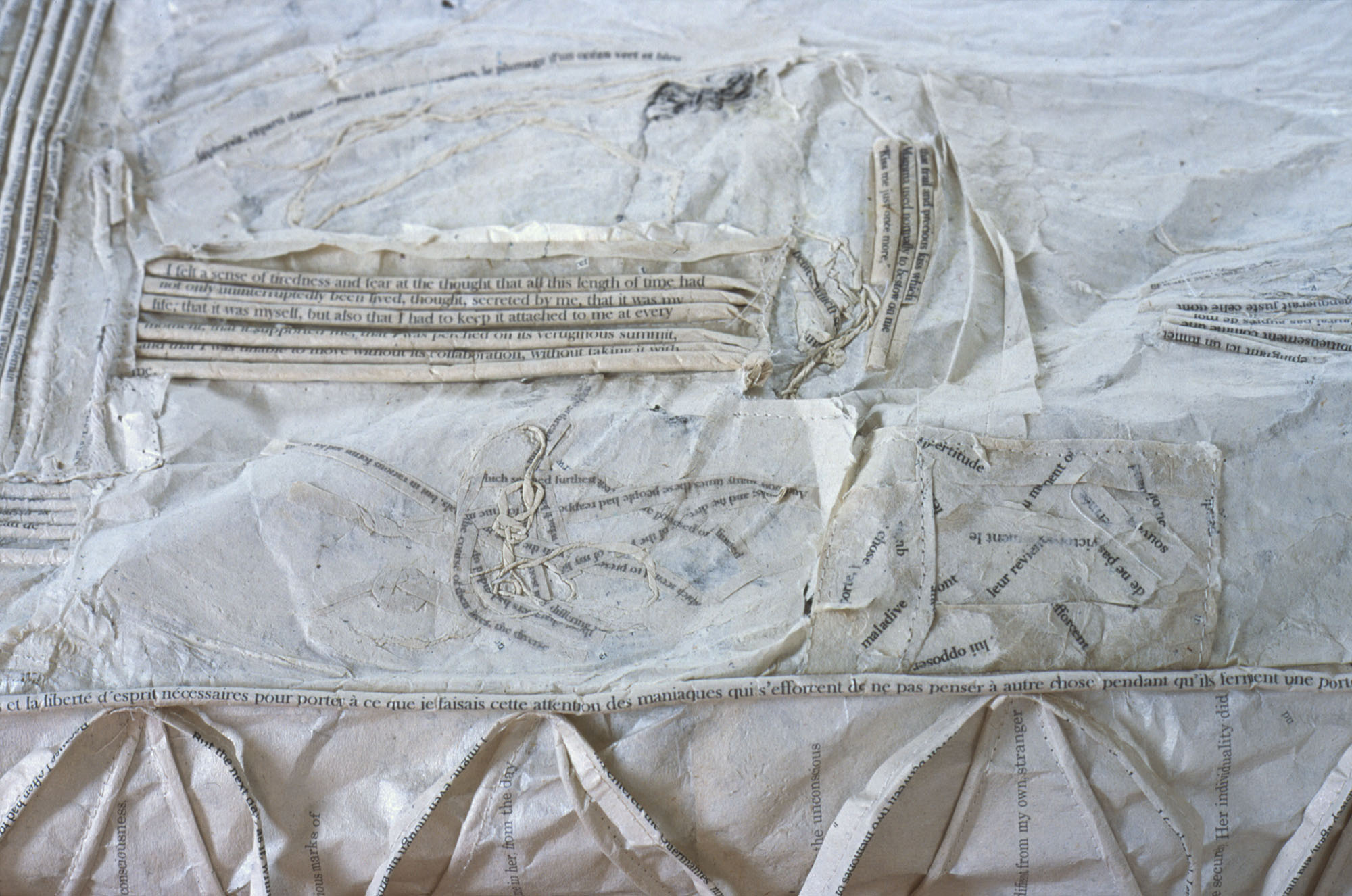
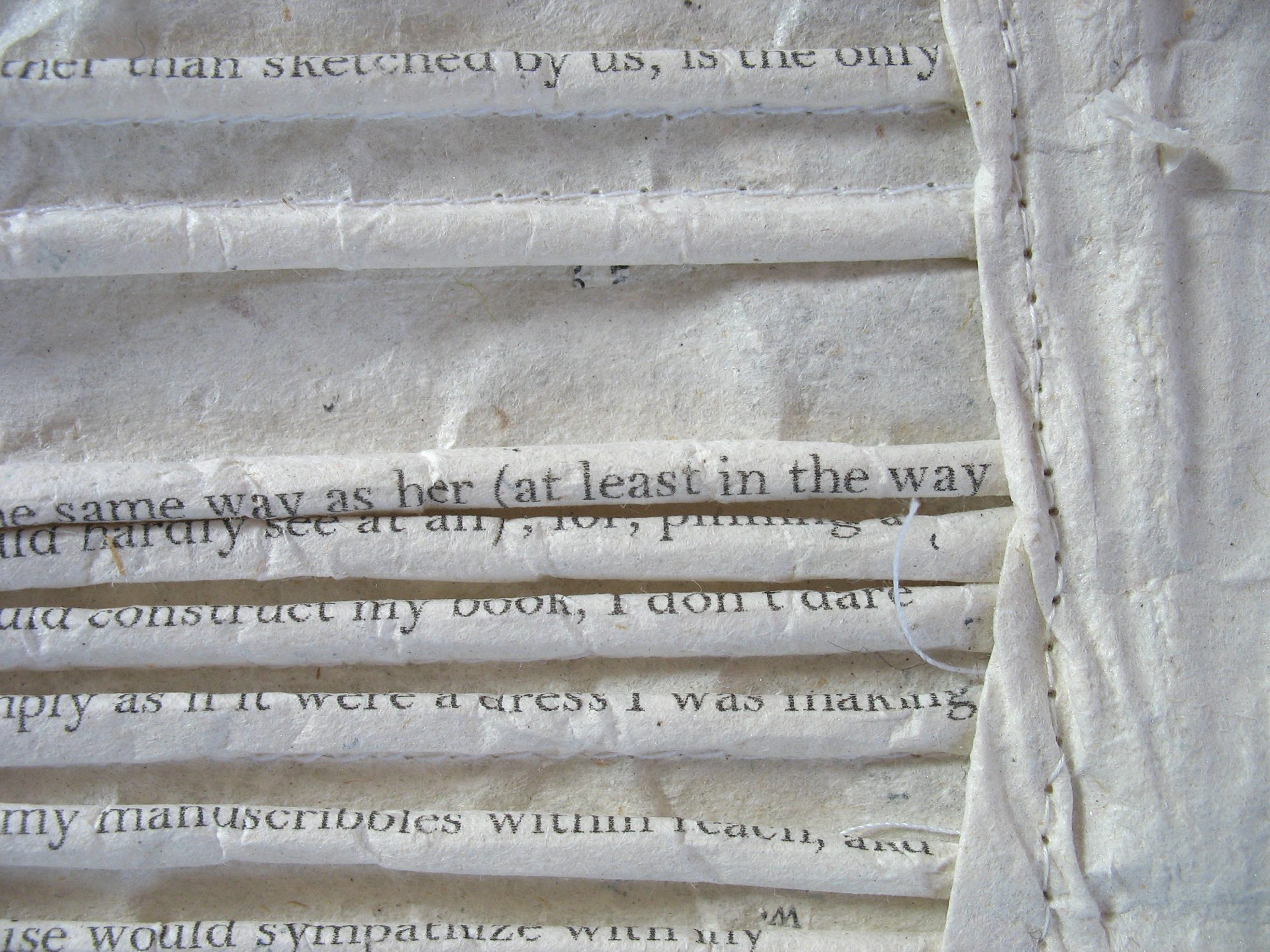
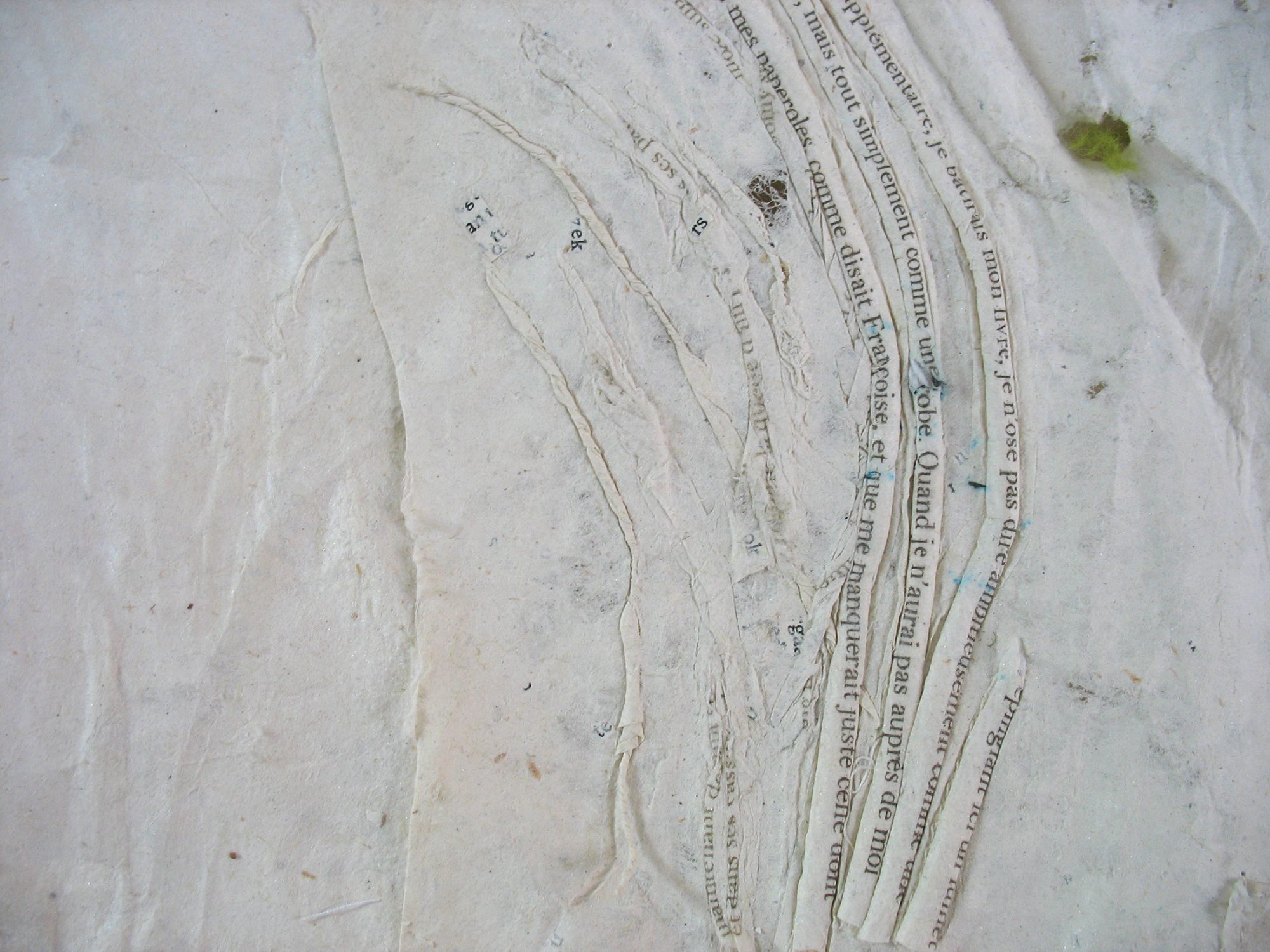
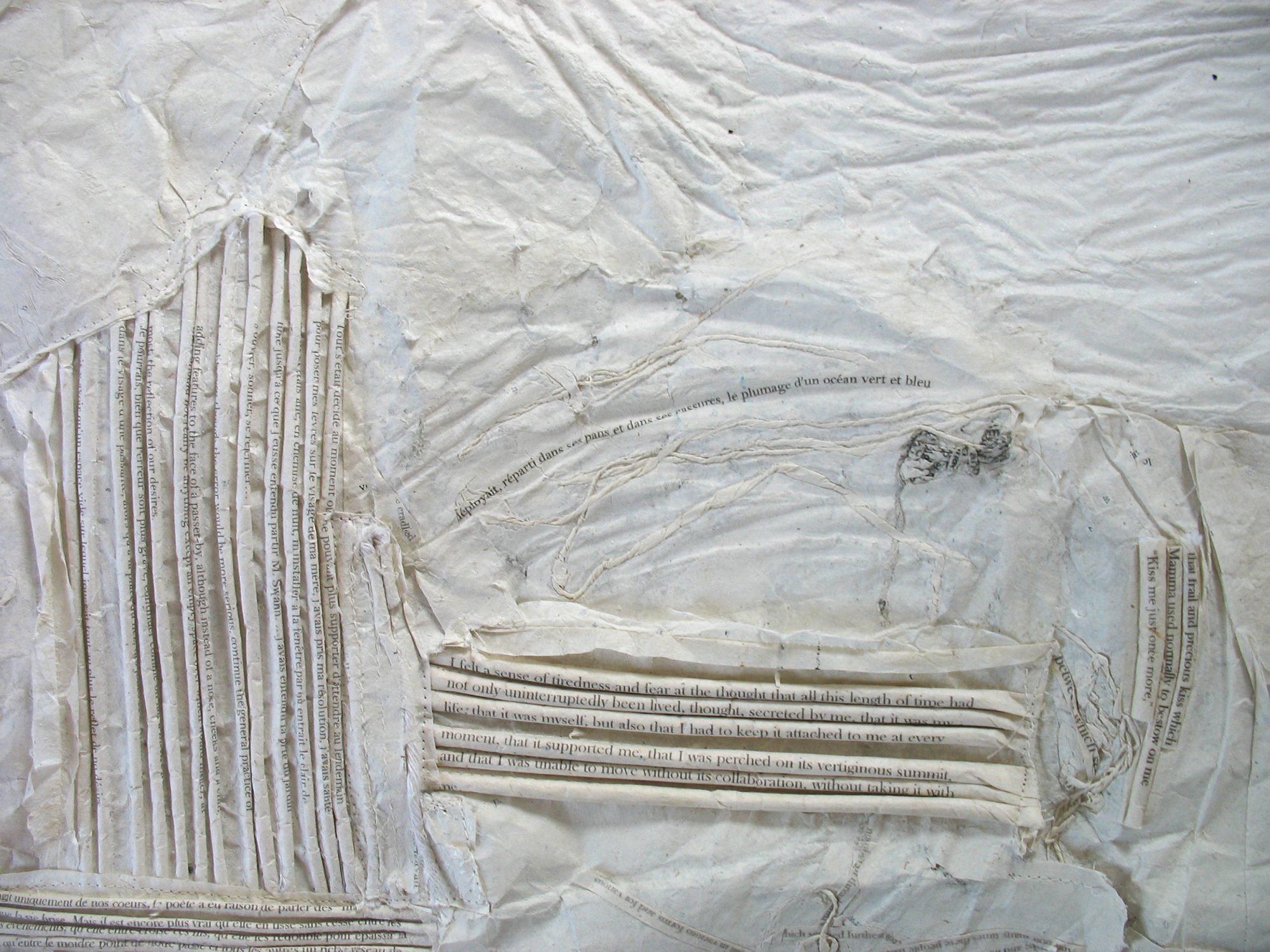
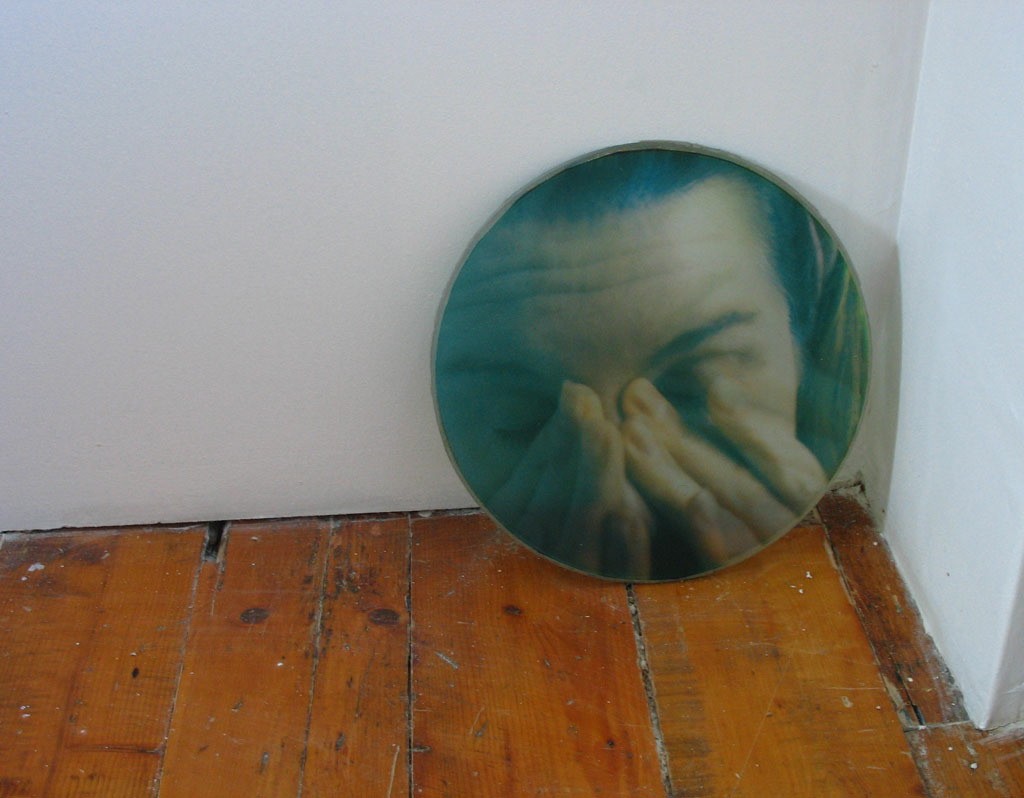
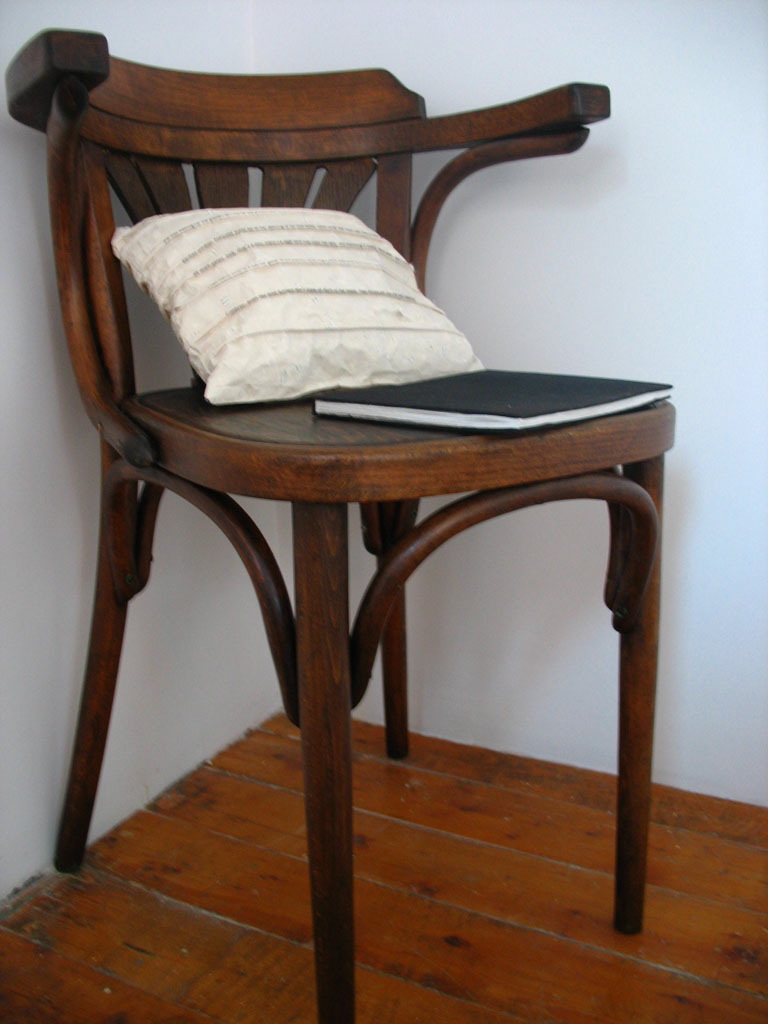
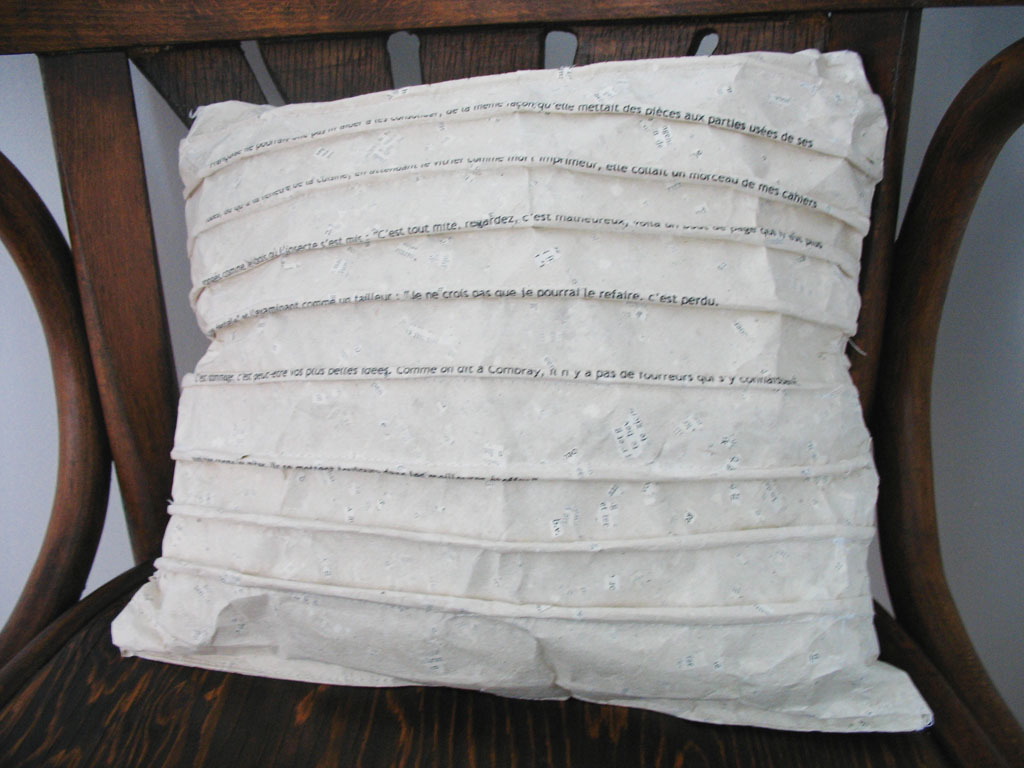
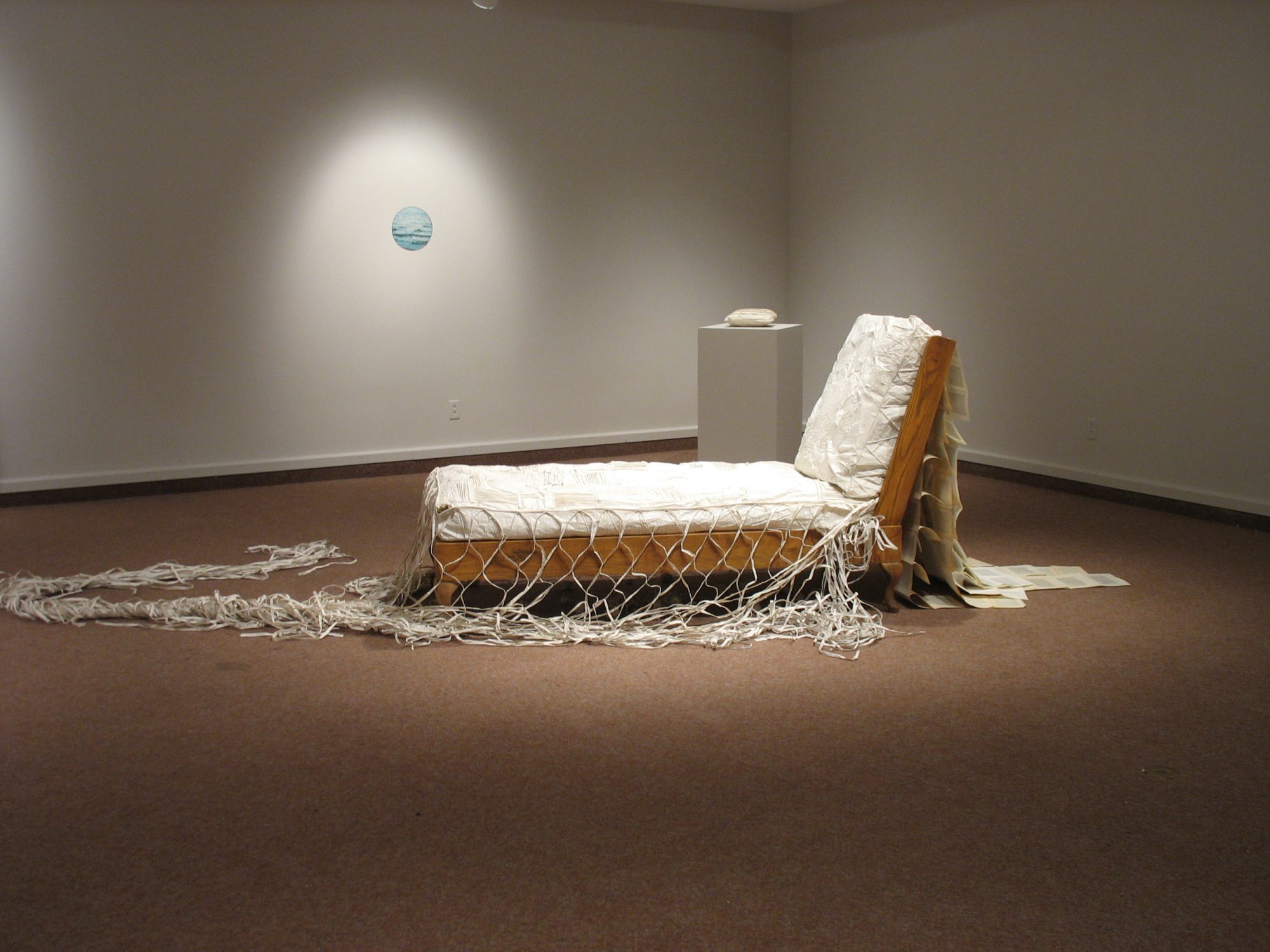
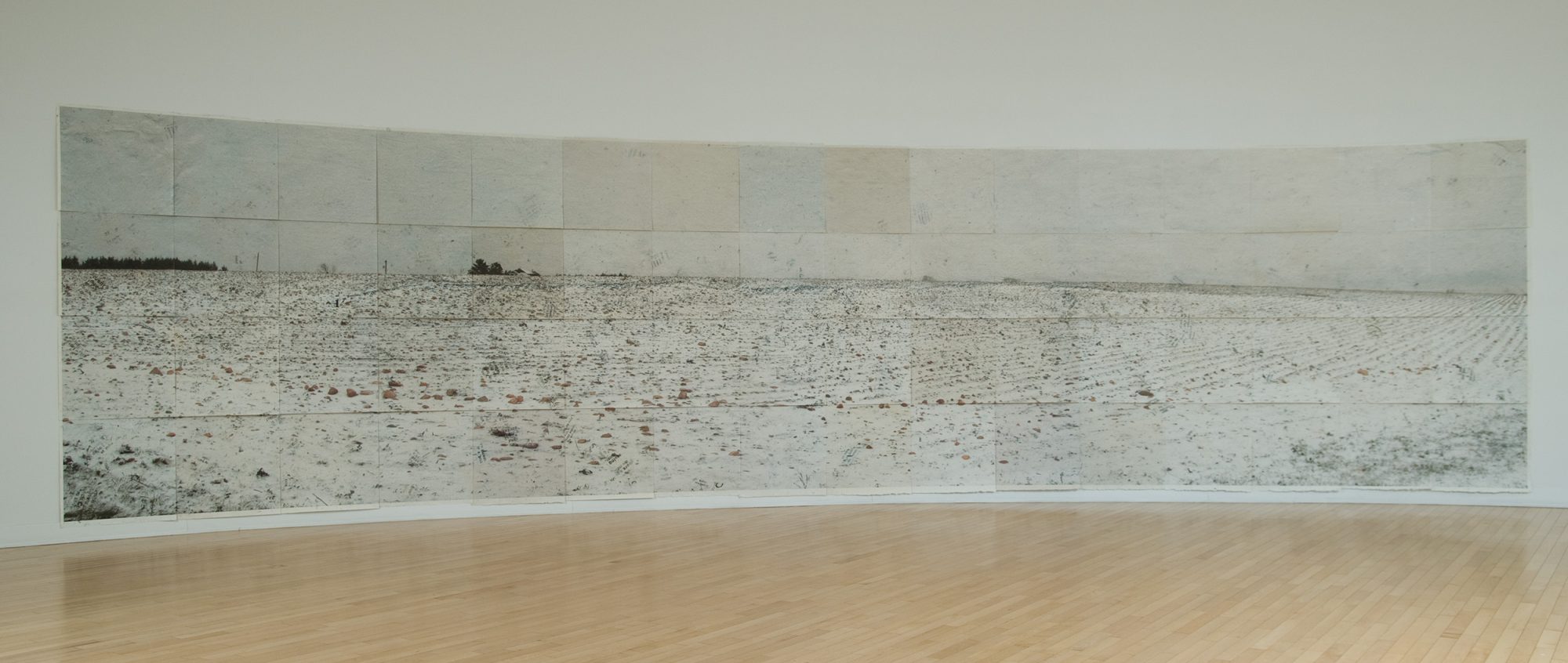
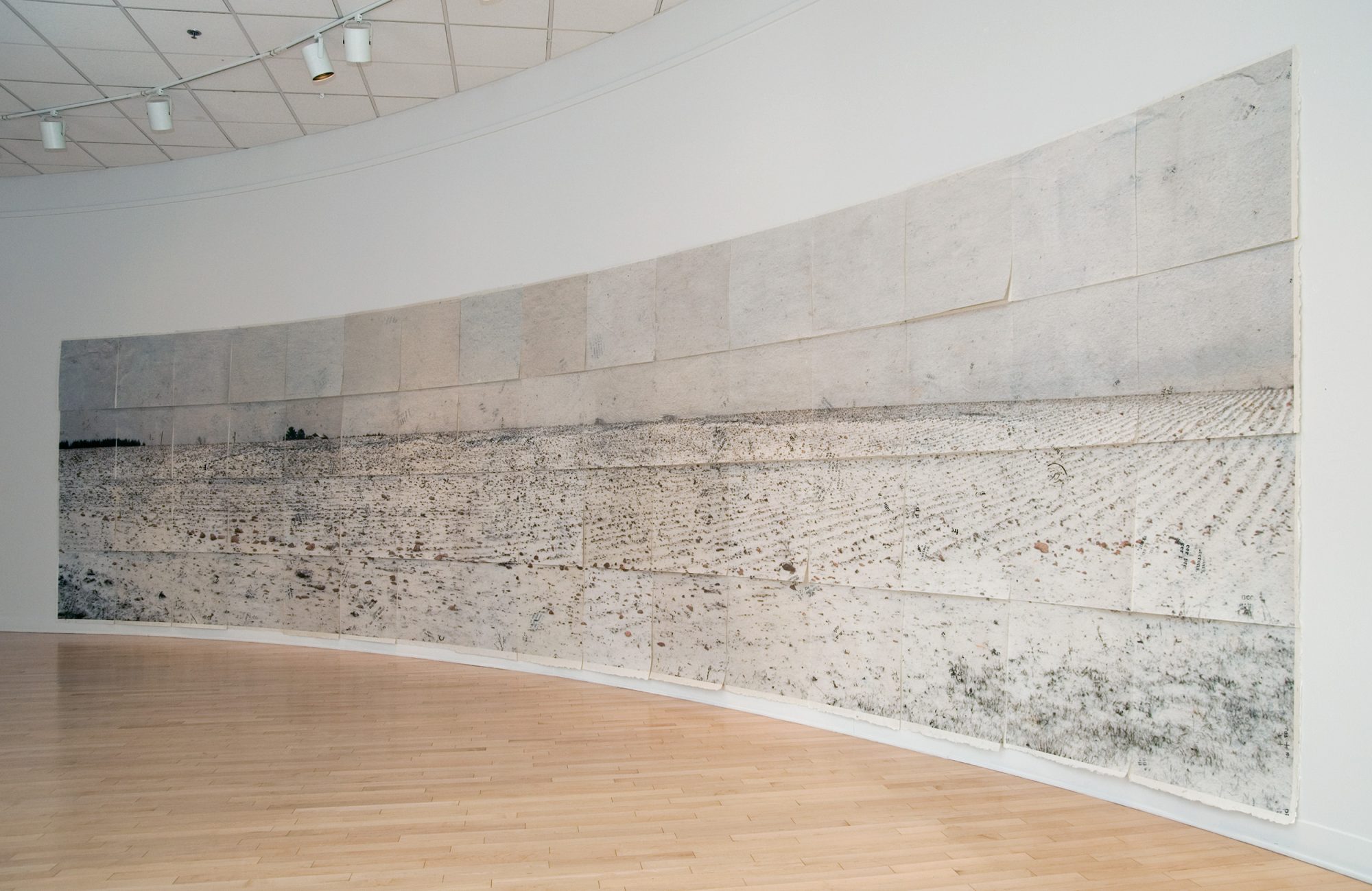
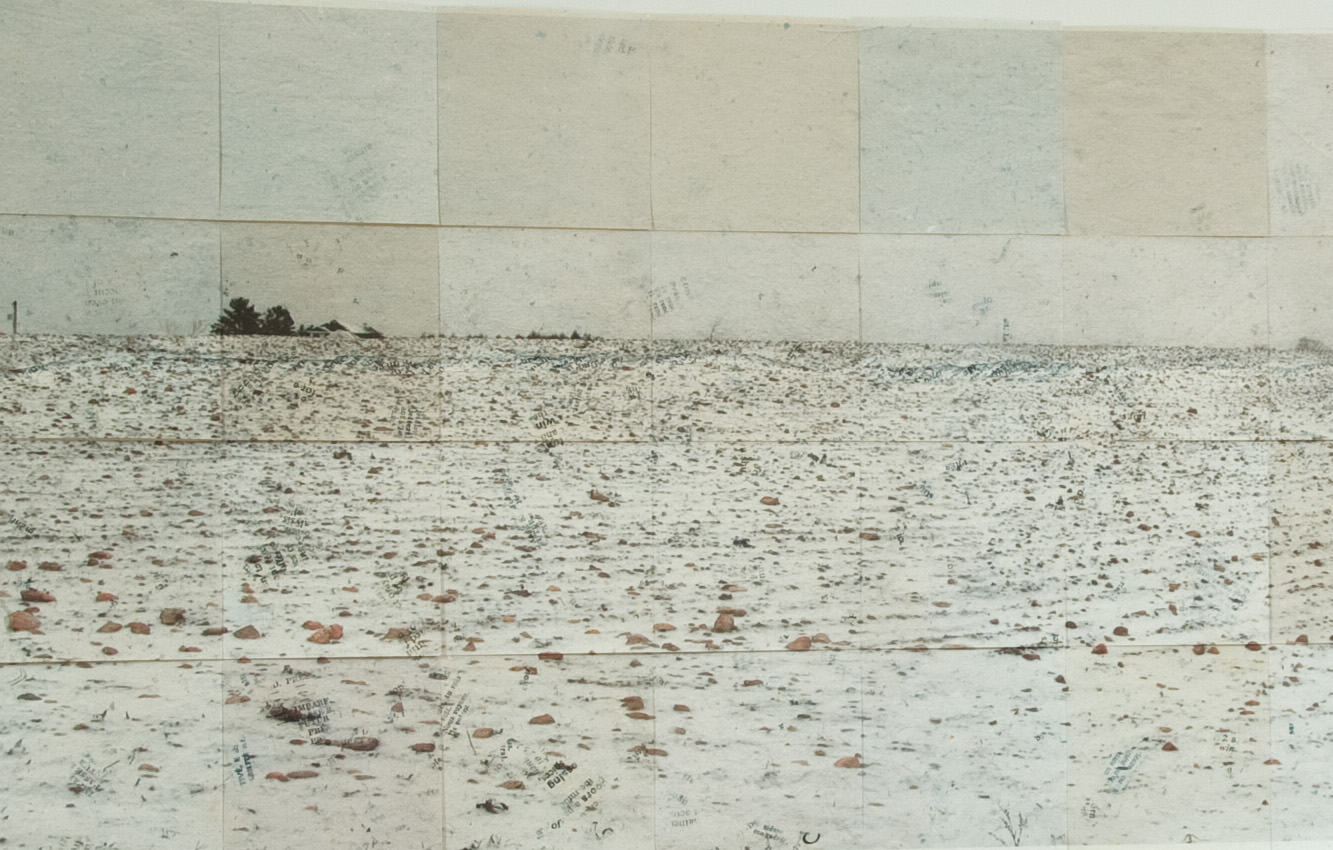
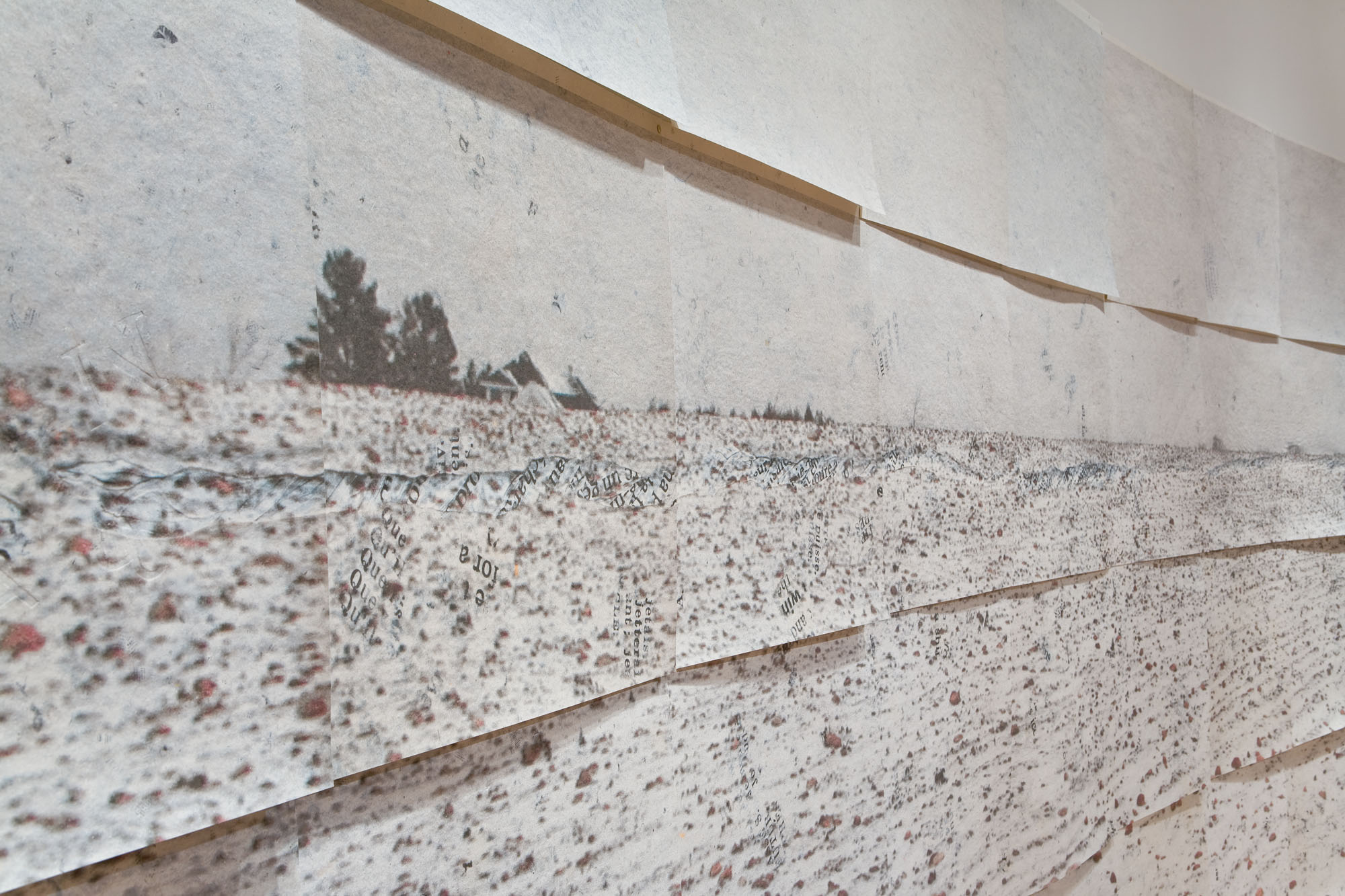
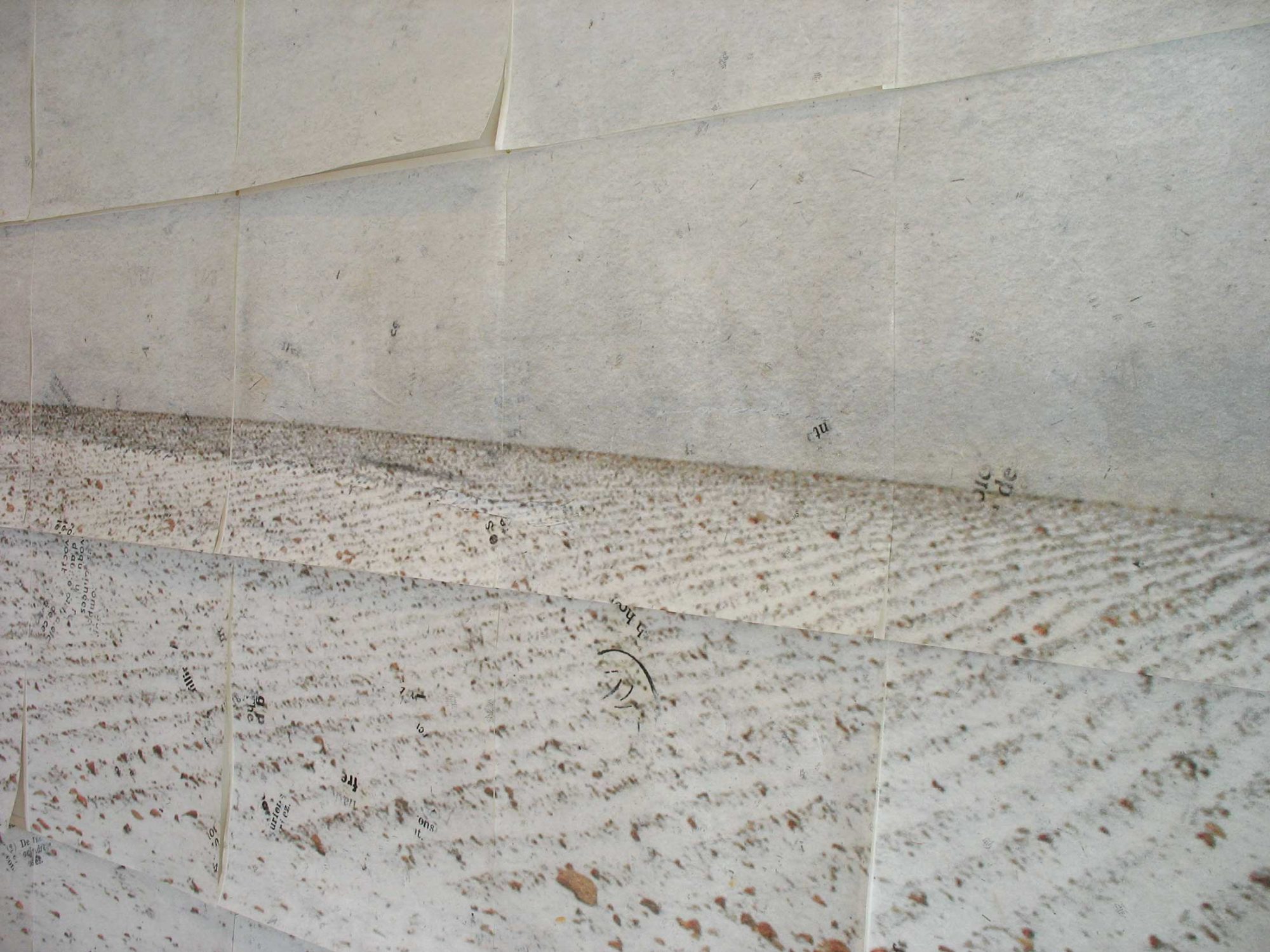
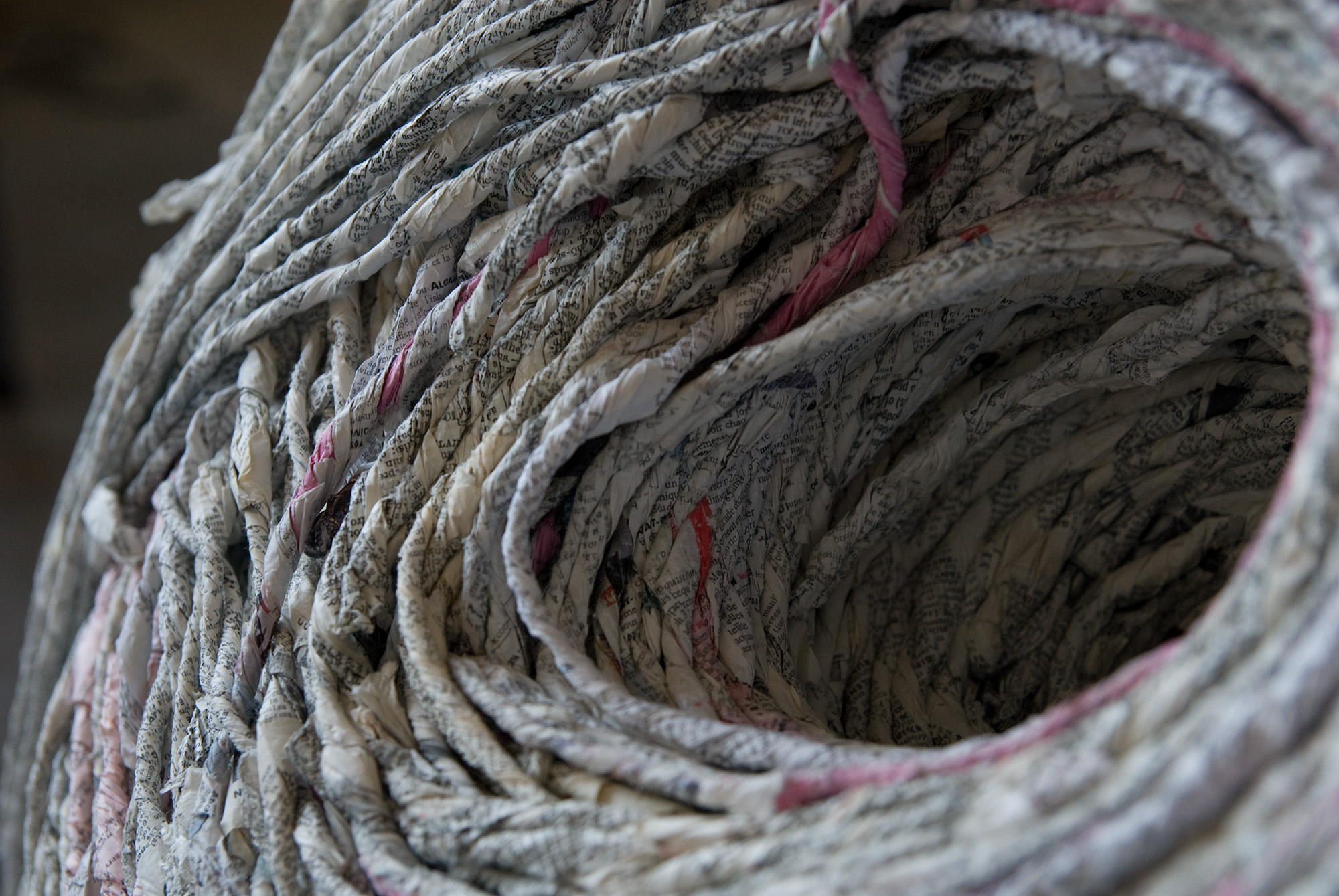
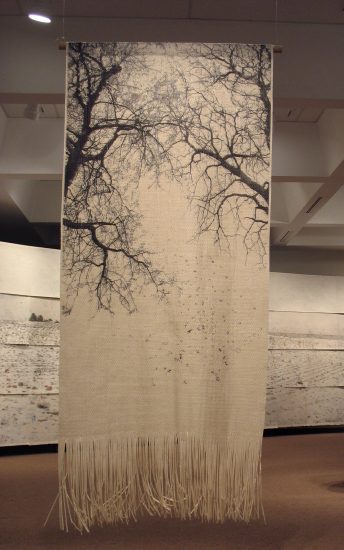
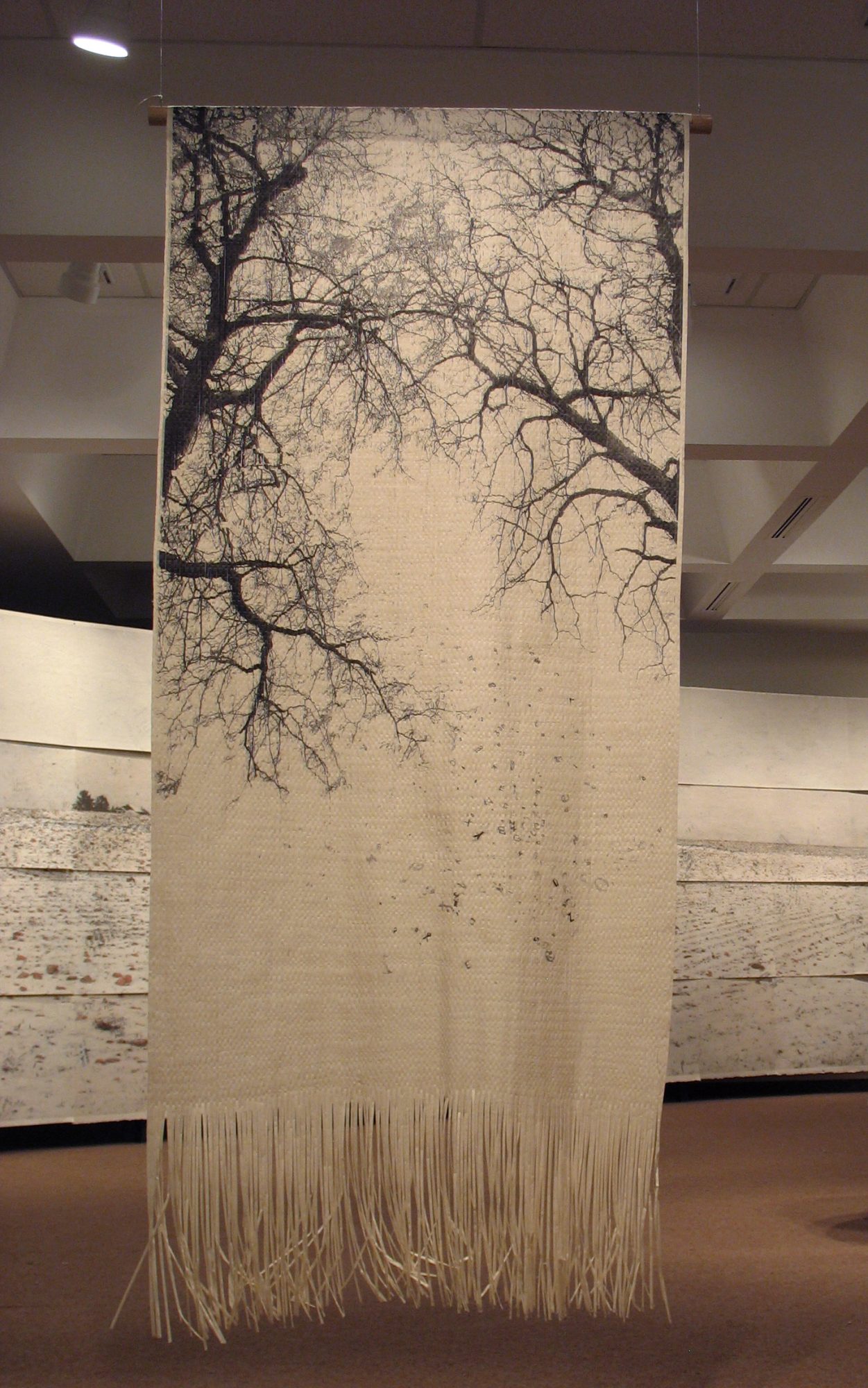
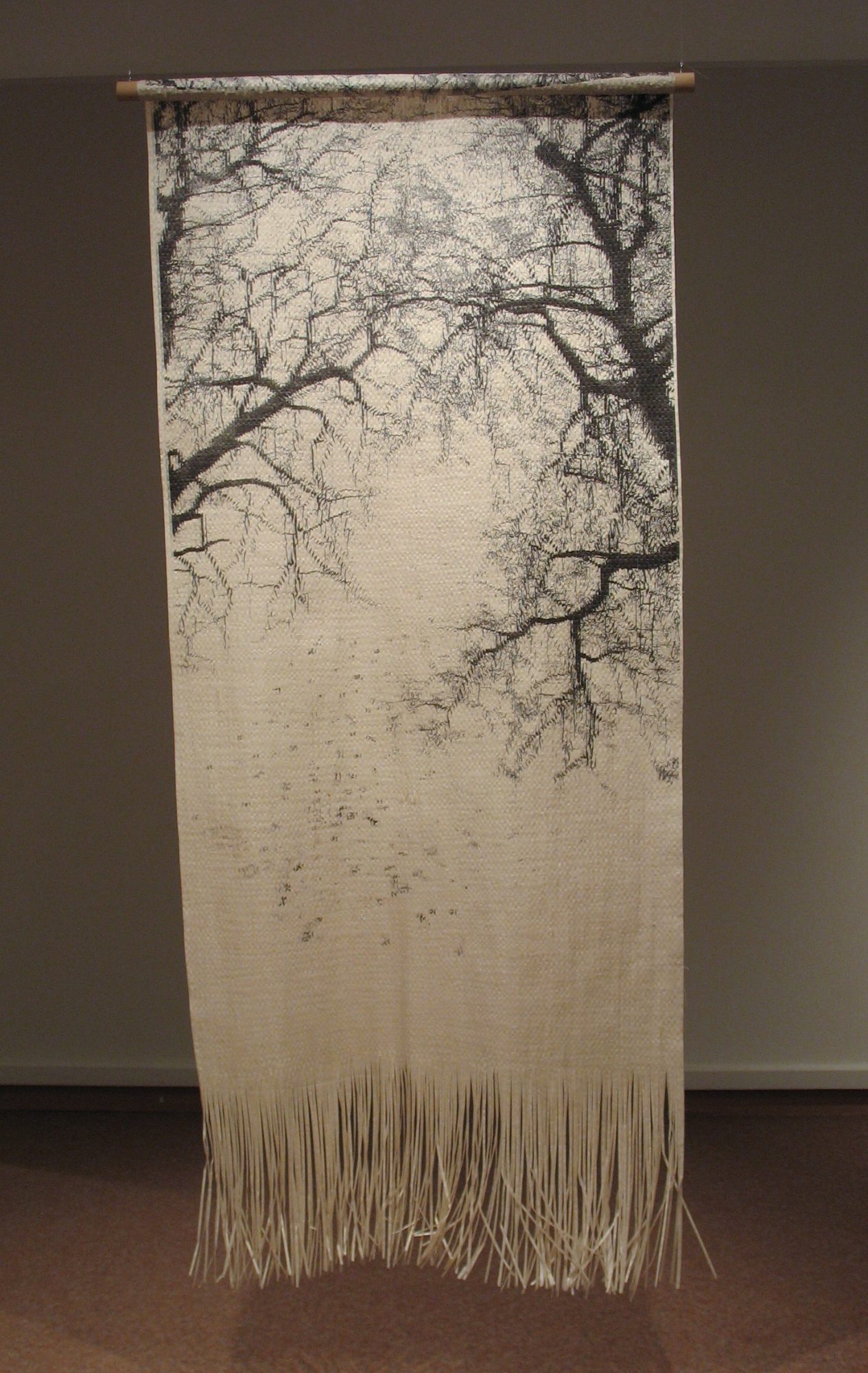
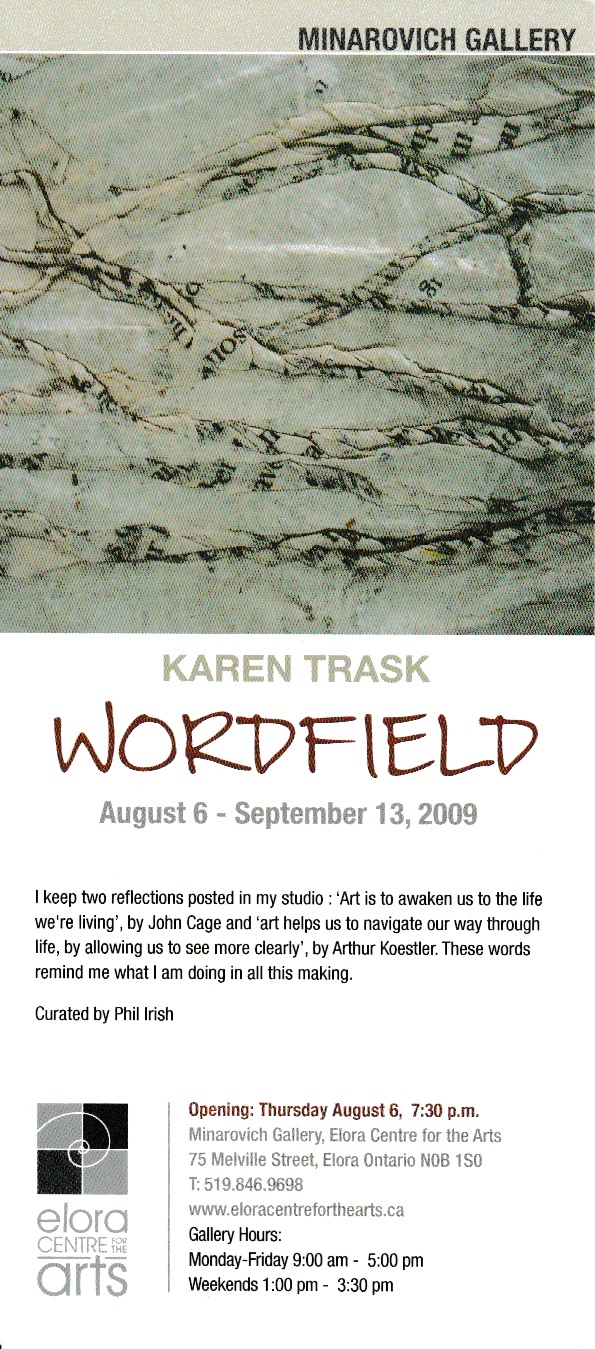
Wordfield regrouped several text-based paper sculptures.
Statement
Wordfield
As a young girl learning to read and to write, I imagined words and letters existing like a river or a current of air floating around me. The image of a woman blowing the seeds of a dandelion has always been central in the design of the front cover of The Larousse Dictionary. Letters of the alphabet as seeds and paper as a field for planting are ideas I explore in a series of works combining language and landscape.
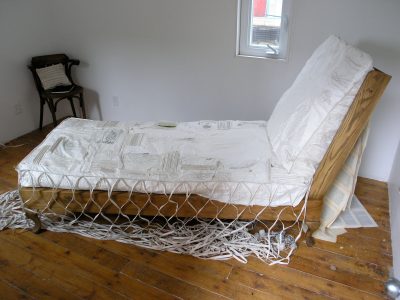
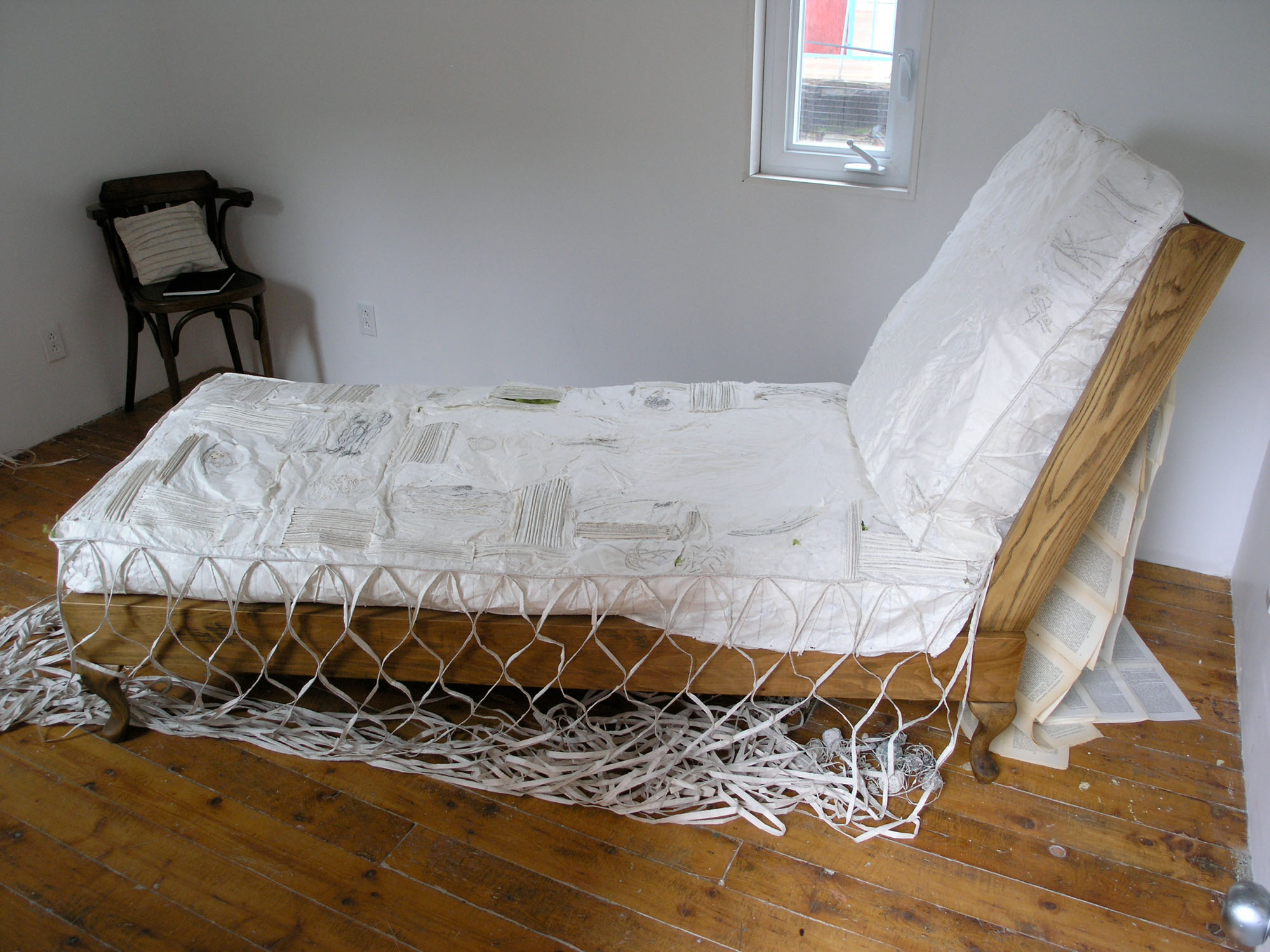
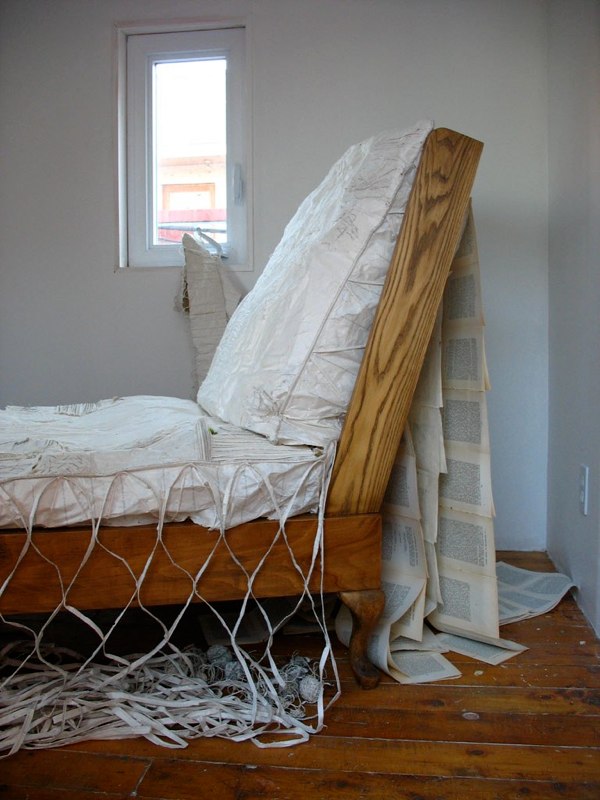
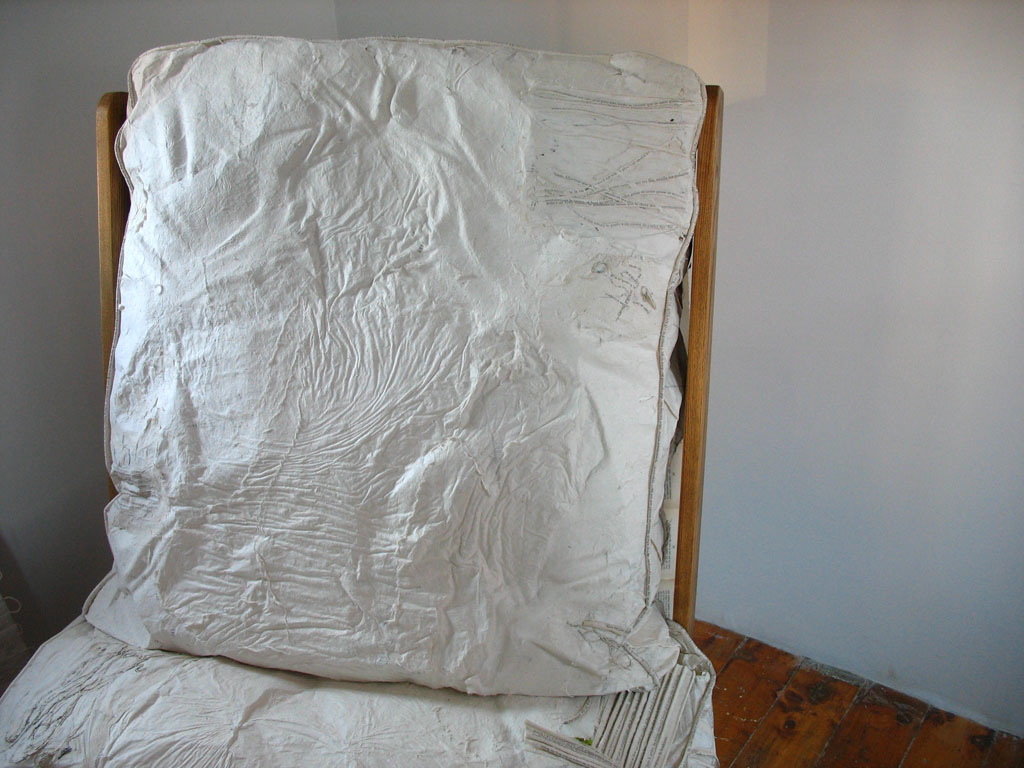
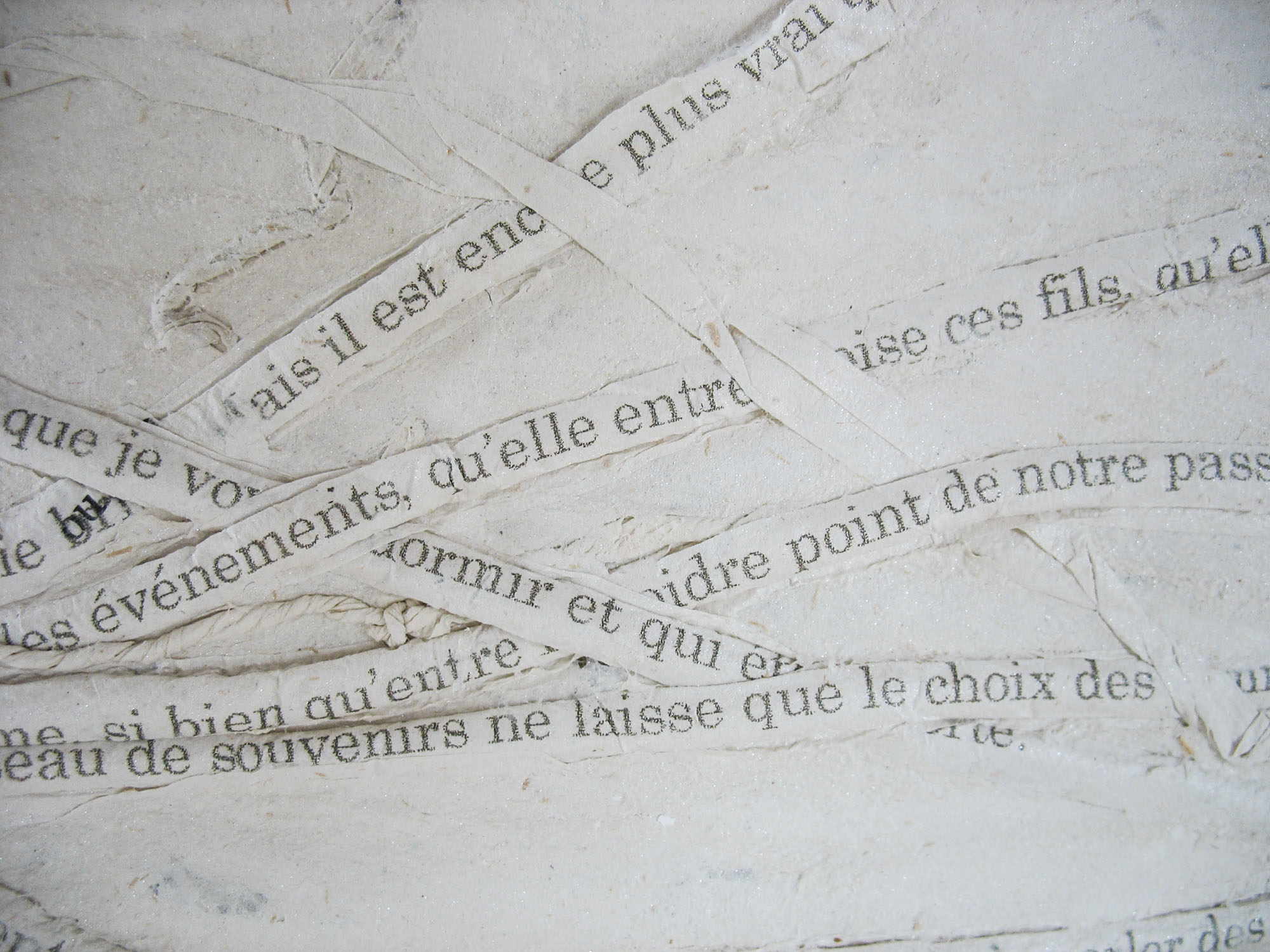
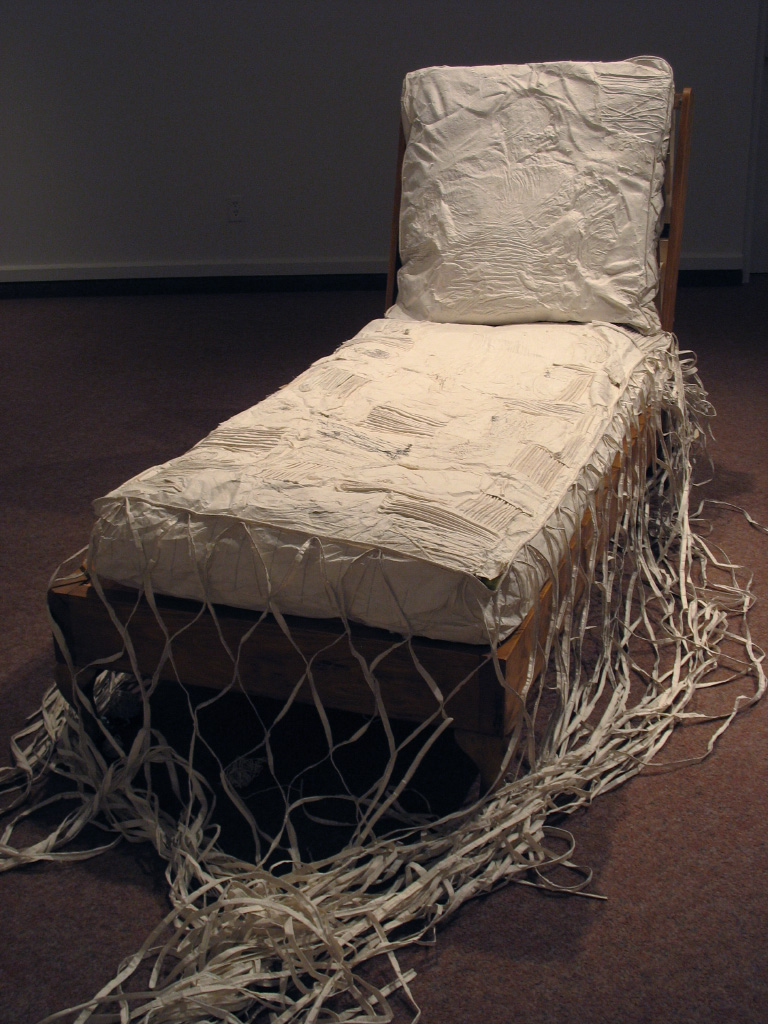
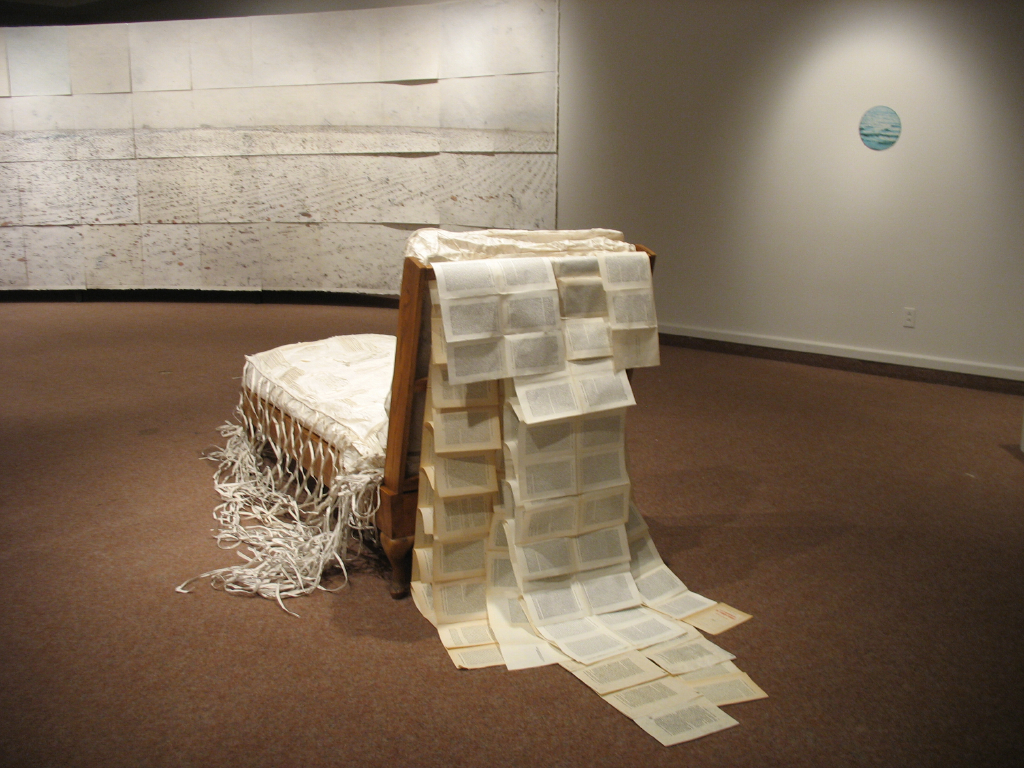
The sculpture, Proust’s Bed: waiting for a kiss, is the result of a year-long project. Sitting in this specially constructed daybed, I read In Search of Lost Time, by Marcel Proust. Quotations regarding sewing, loving and writing were collected and printed onto sheets of handmade paper. An impression of my body lieing on the bed was cast in paper. These papers were then assembled and sewn together in a pattern reminiscent of a crazy quilt and used to cover the mattresses of the bed.
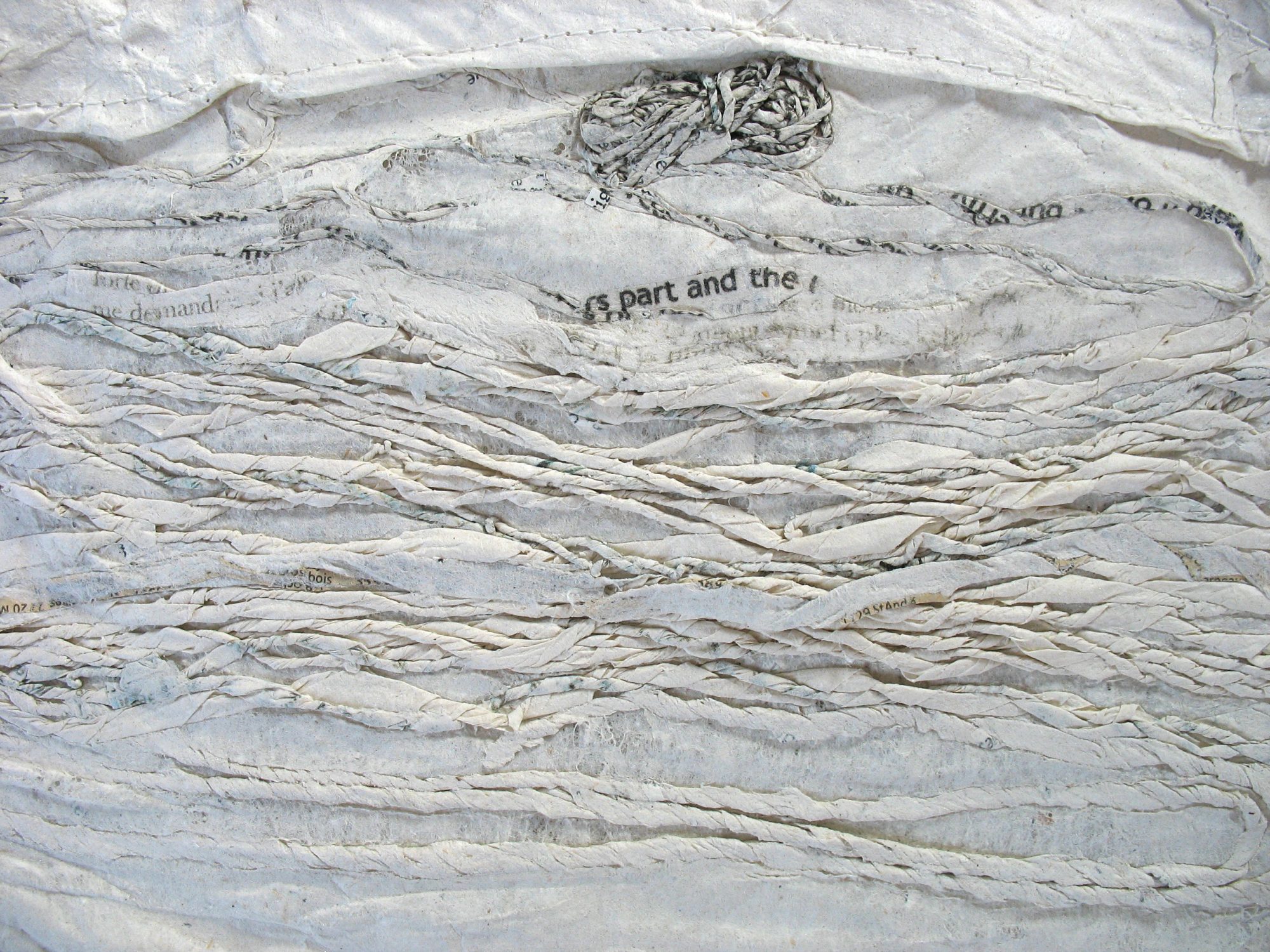
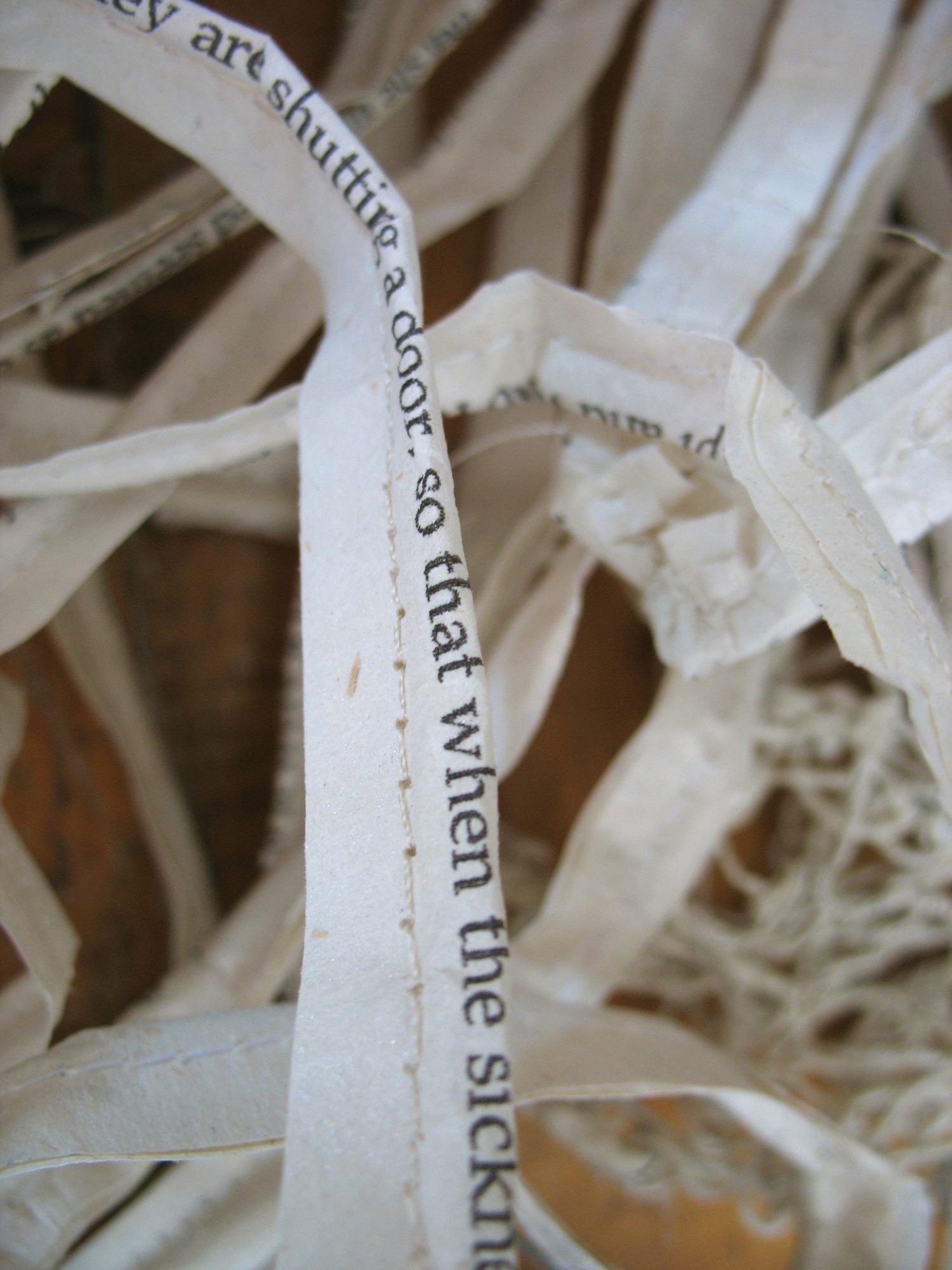
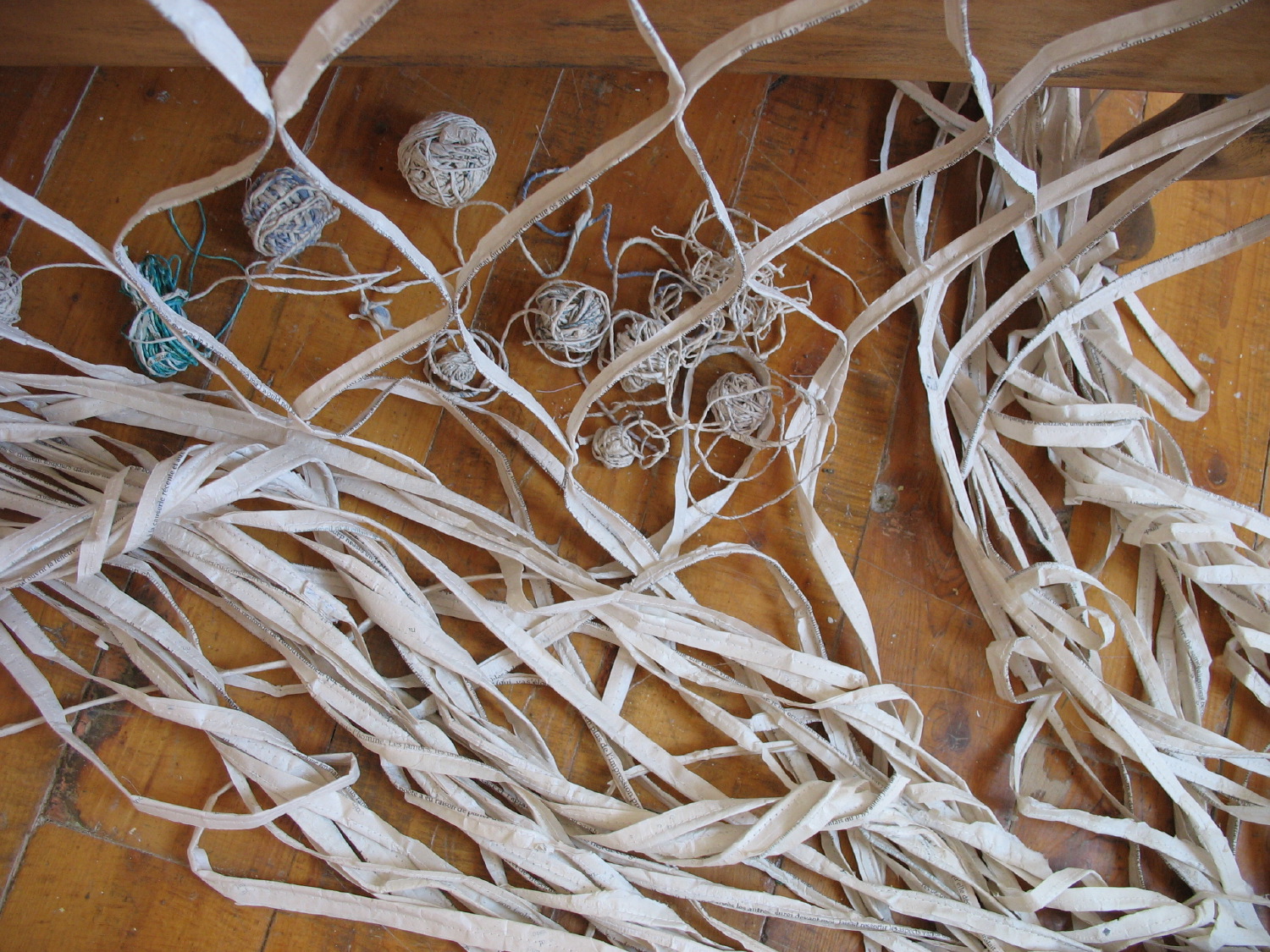
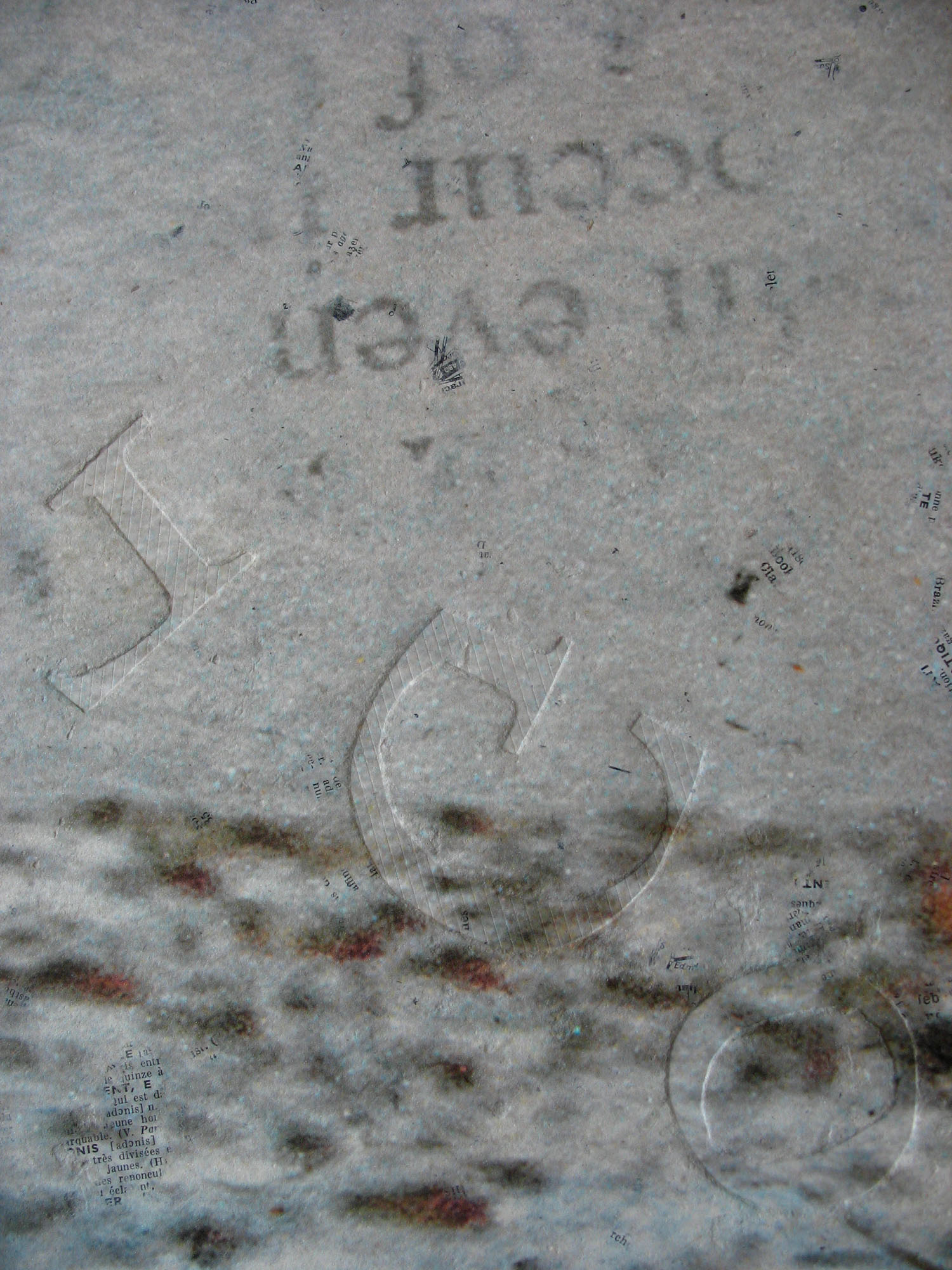
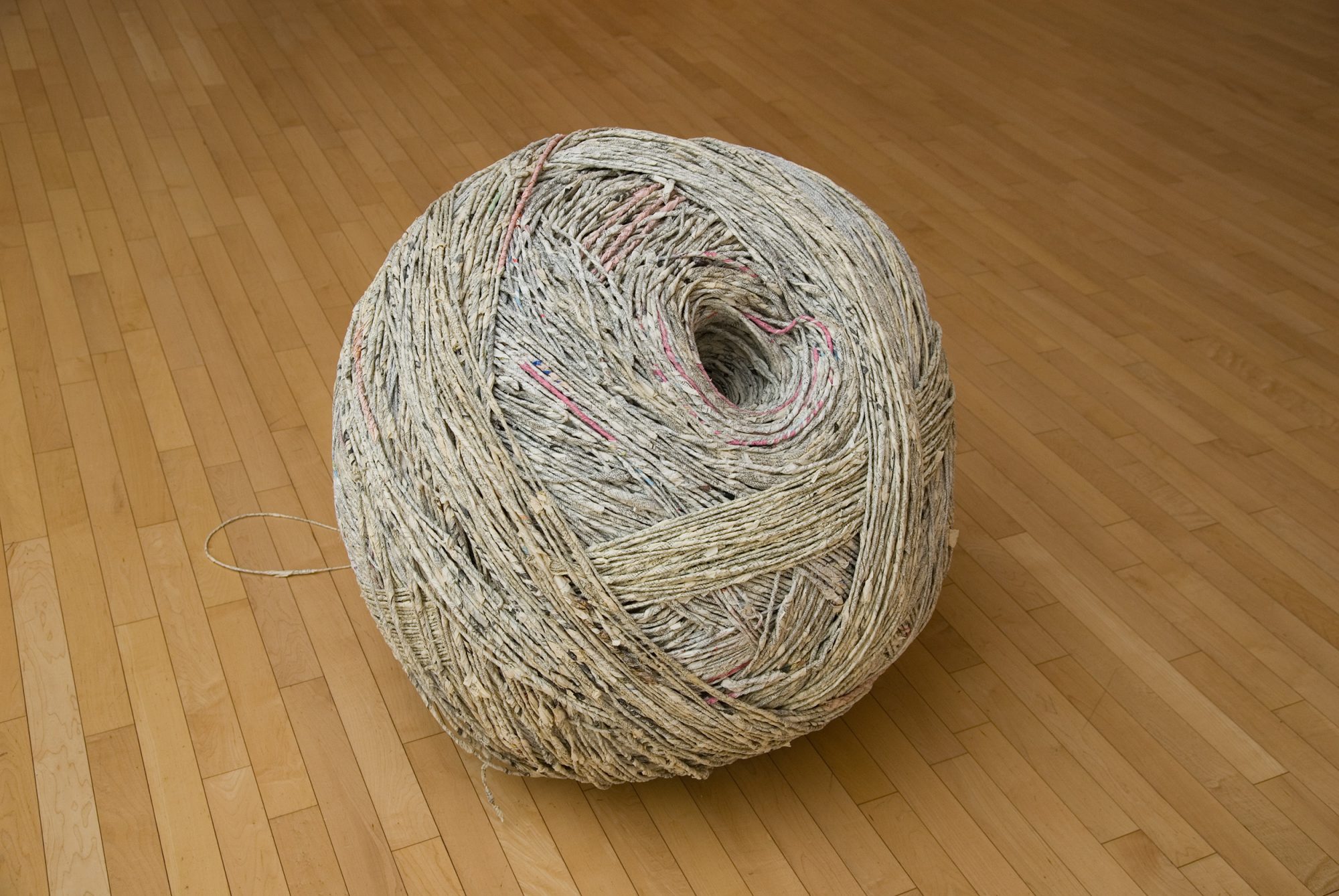
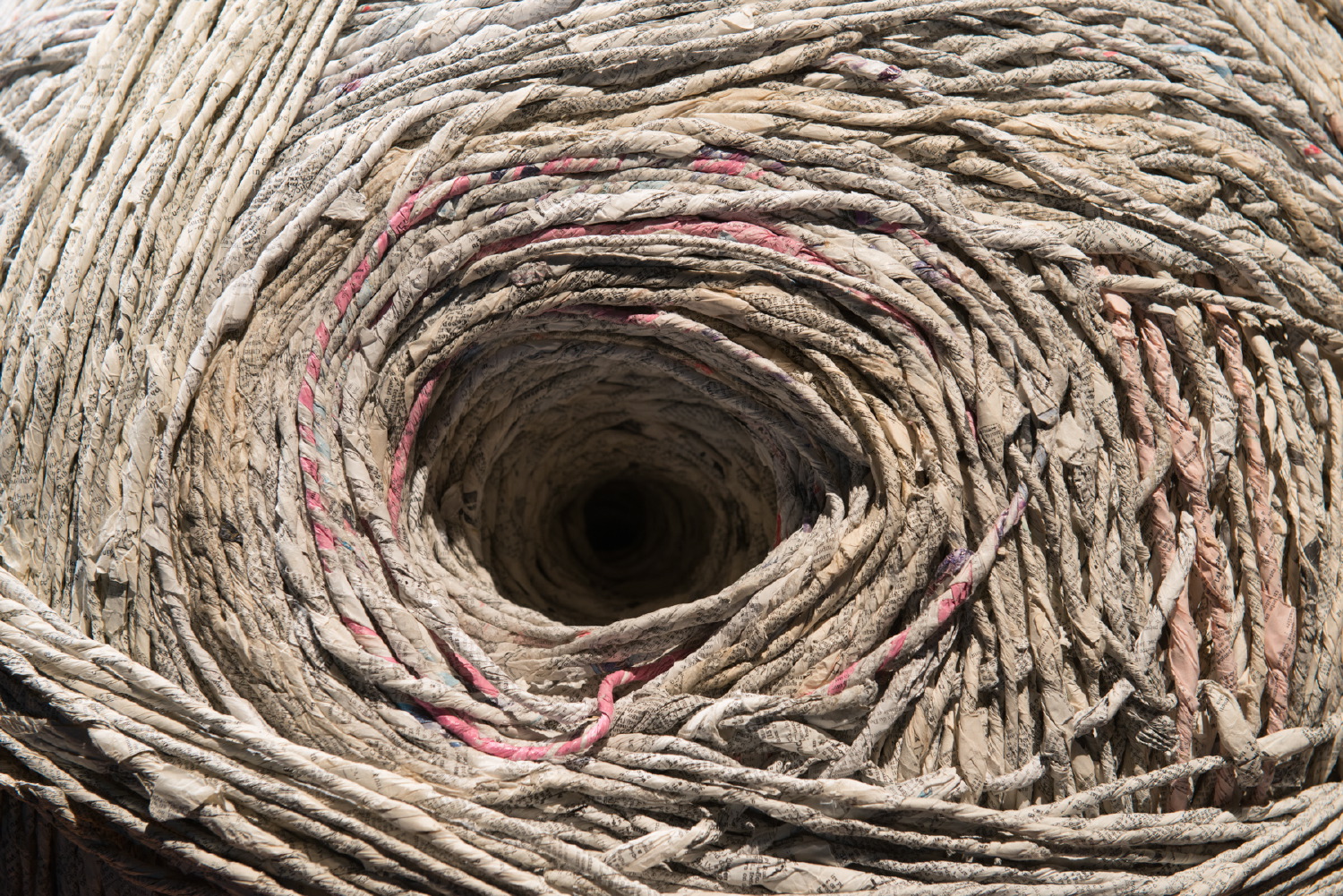
Pages and covers from hundreds of dictionaries were recycled in the works, Where the words go, Portes and Wordfield. Some pages were torn and encorporated into sheets of hand-made paper for printing, while others were reconstituted through spinning into long paper threads. A desire to draw attention to the importance of paper was the starting point for these works.
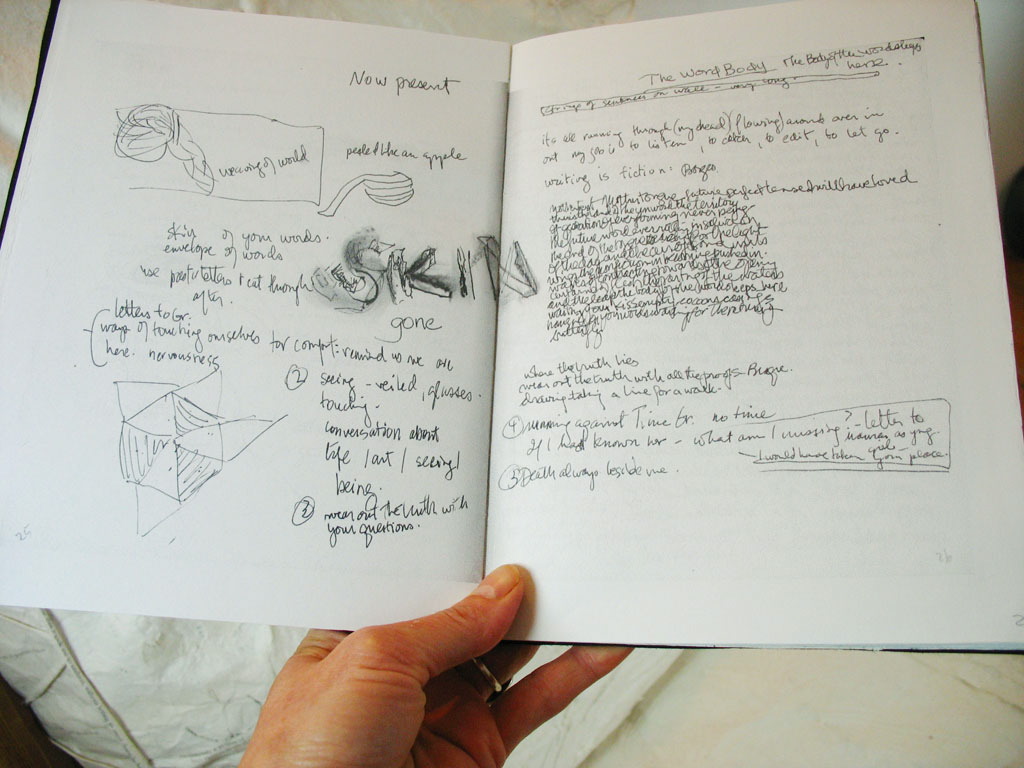
My creative process has developed as a series of poetic investigations exploring human experience through language. A “fleshing” of words and the empty space around words is central in these investigations. In video, installation, artist books and performance, I attempt to touch words and the silence between words.
A love-hate relationship to the written word was born out of loss. When I was 6 years old, my mother died in a car accident. Learning to read and to write coincided with death. This marked the beginning of a dialogue with absence, that I have been exploring, breathing, falling into and ultimately searching for words to describe. Paper, normally the invisible and ignored support material is one of the materials I use to create this presence of absence. My creative process includes researching the etymological roots of words and experimenting with early textile arts technologies such as spinning and weaving. Knowing the history of words such as: text, (from textus meaning textile in Latin,) to spin, (to draw out of chaos, Latin,) stitch or suture (Sanskrit, word sutra, meaning thread and narrative scriptures) contributes to the understanding of these works.
« For over 20,000 years until the industrial revolution, the textile arts were an enormous economic force belonging primarily to women. Because of the perishability of these products, much of this contribution did not find its way into history books. Before writing became the principle means of communicating and recording information, clothing and textiles provided a place for social messages. » (E. Wayland Barber, Women’s Work) The spinning in this project is a reminder of this contribution – a remembering through the fingers
In the exhibition Wordfield, I create space for my own sculptural writing.
Karen Trask
2009