

Description
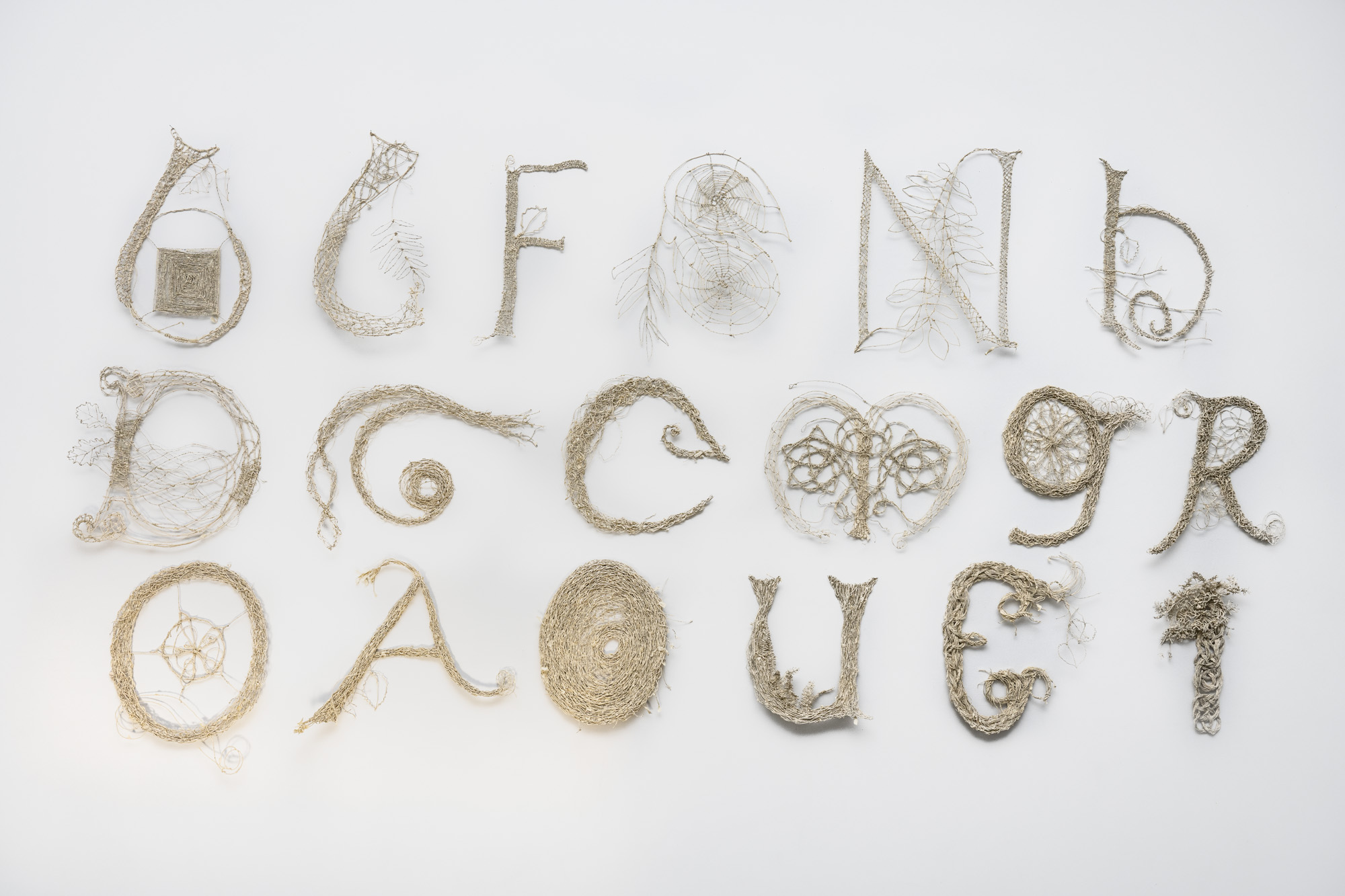
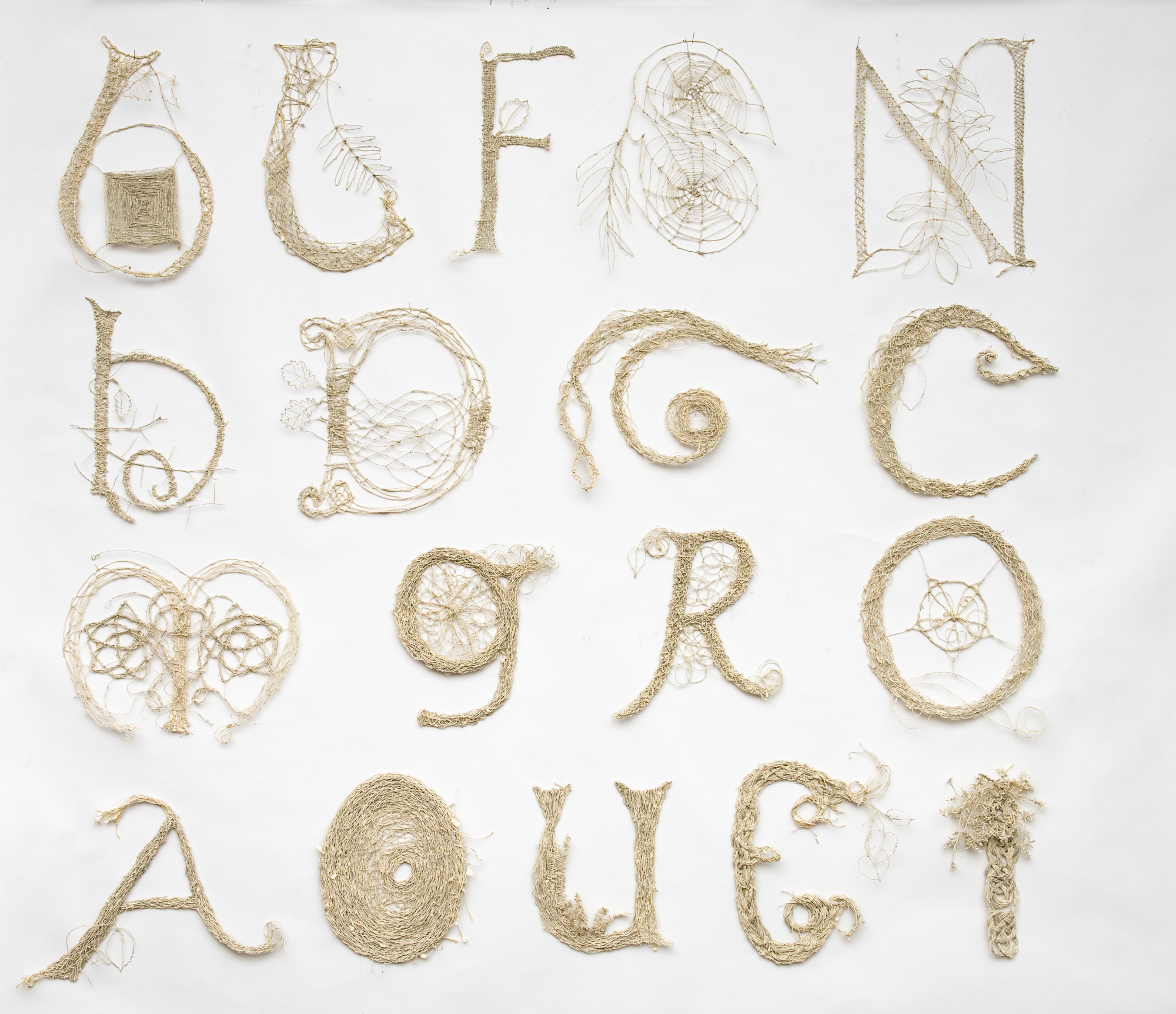
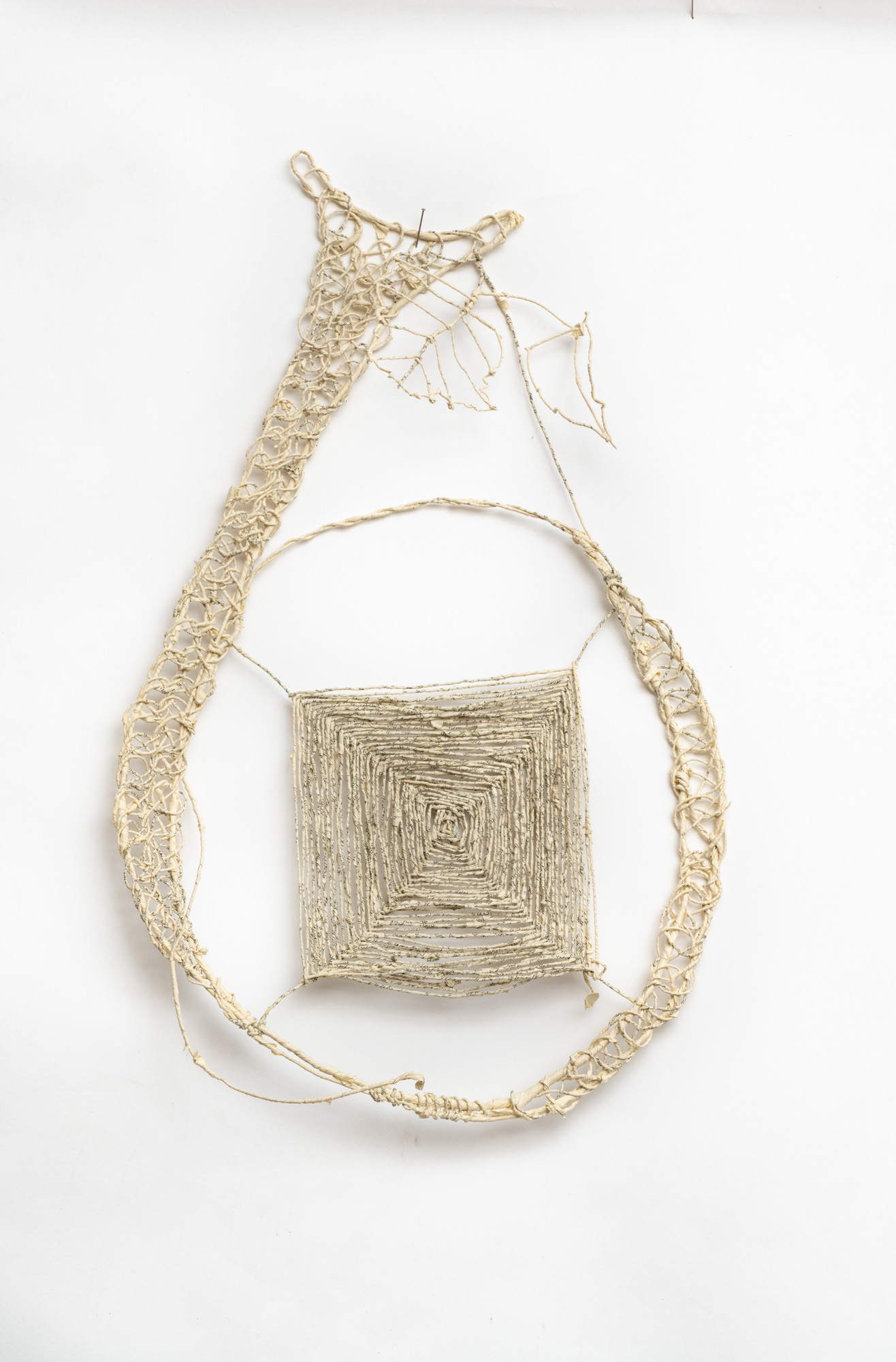
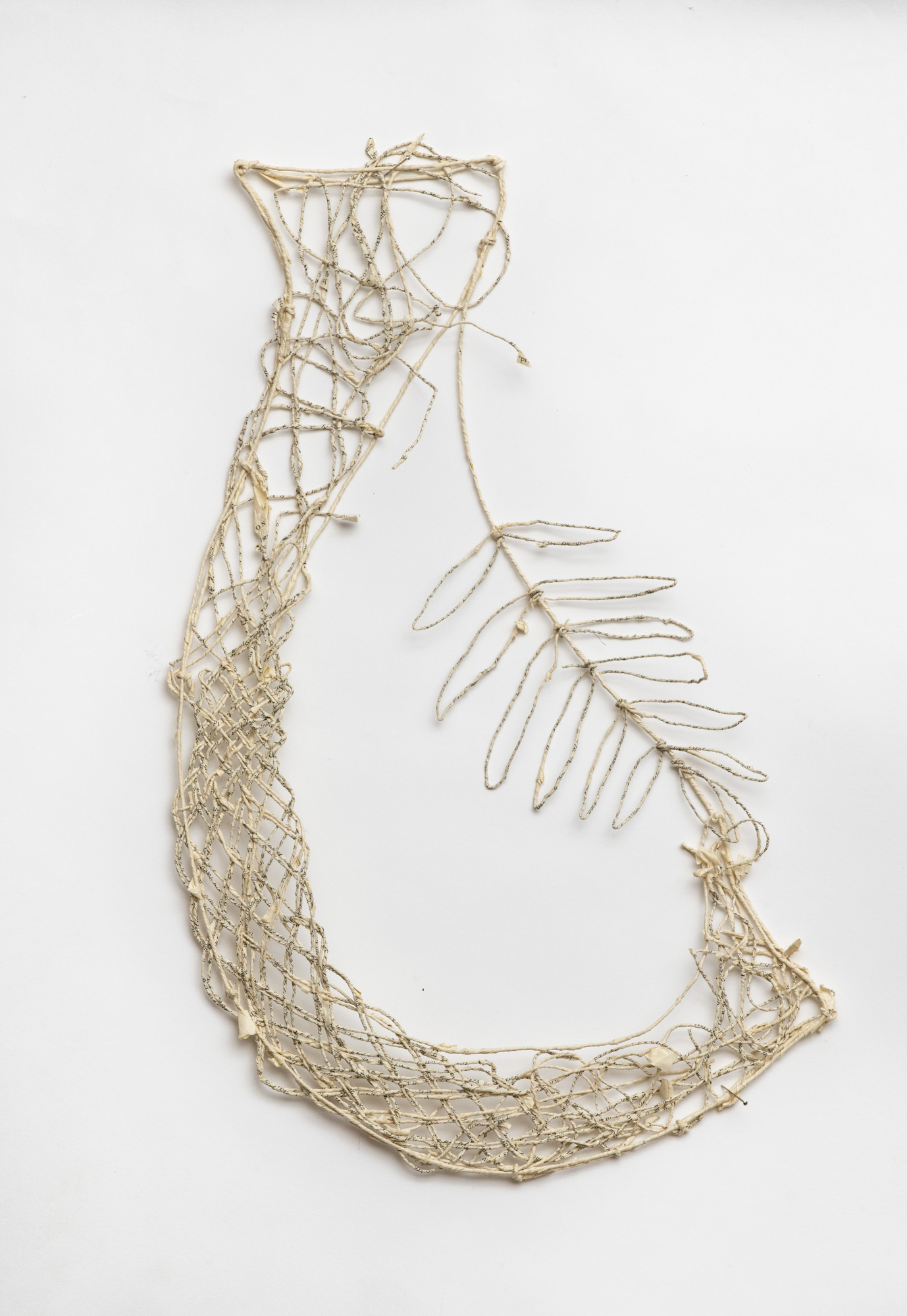
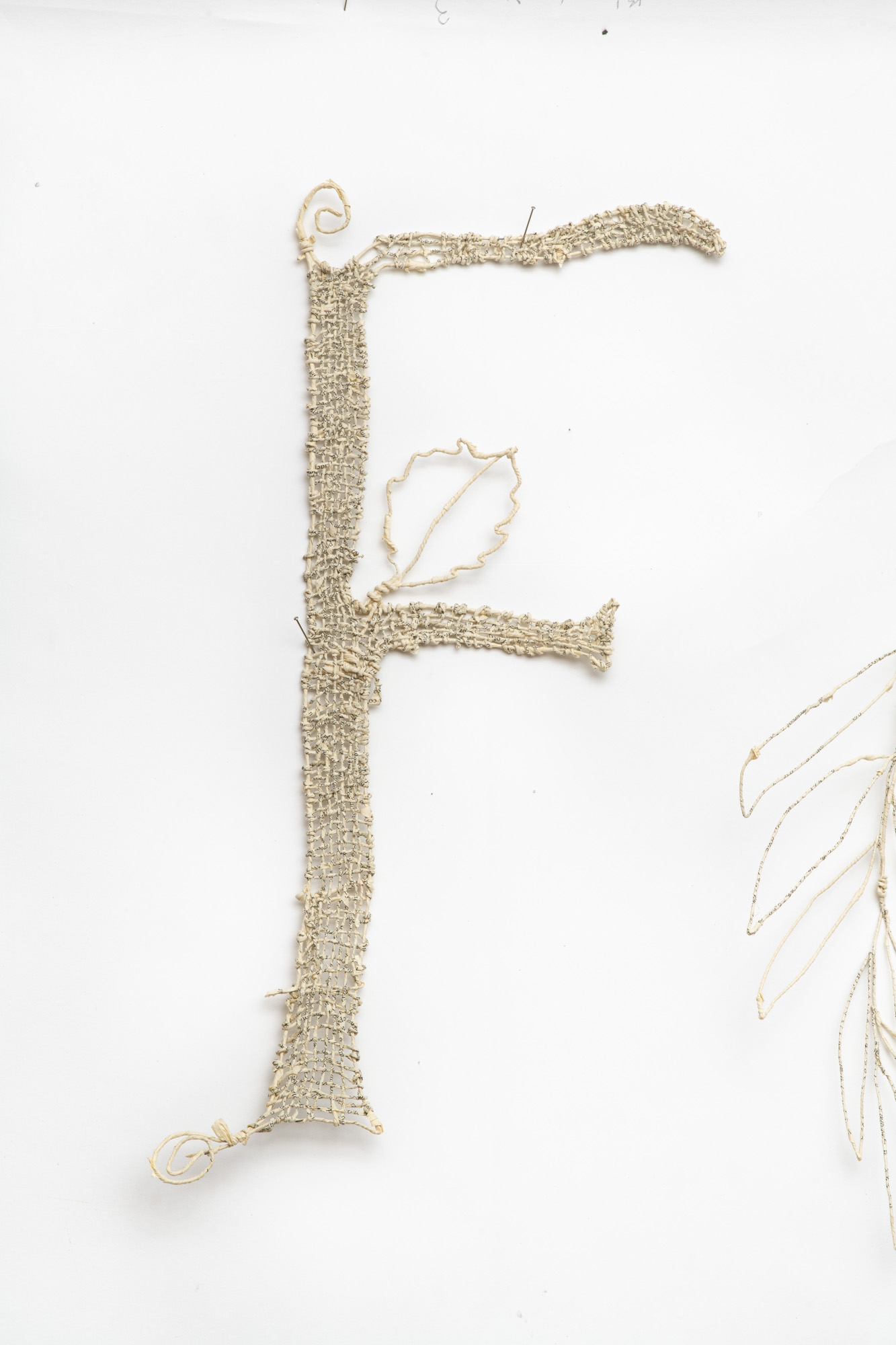
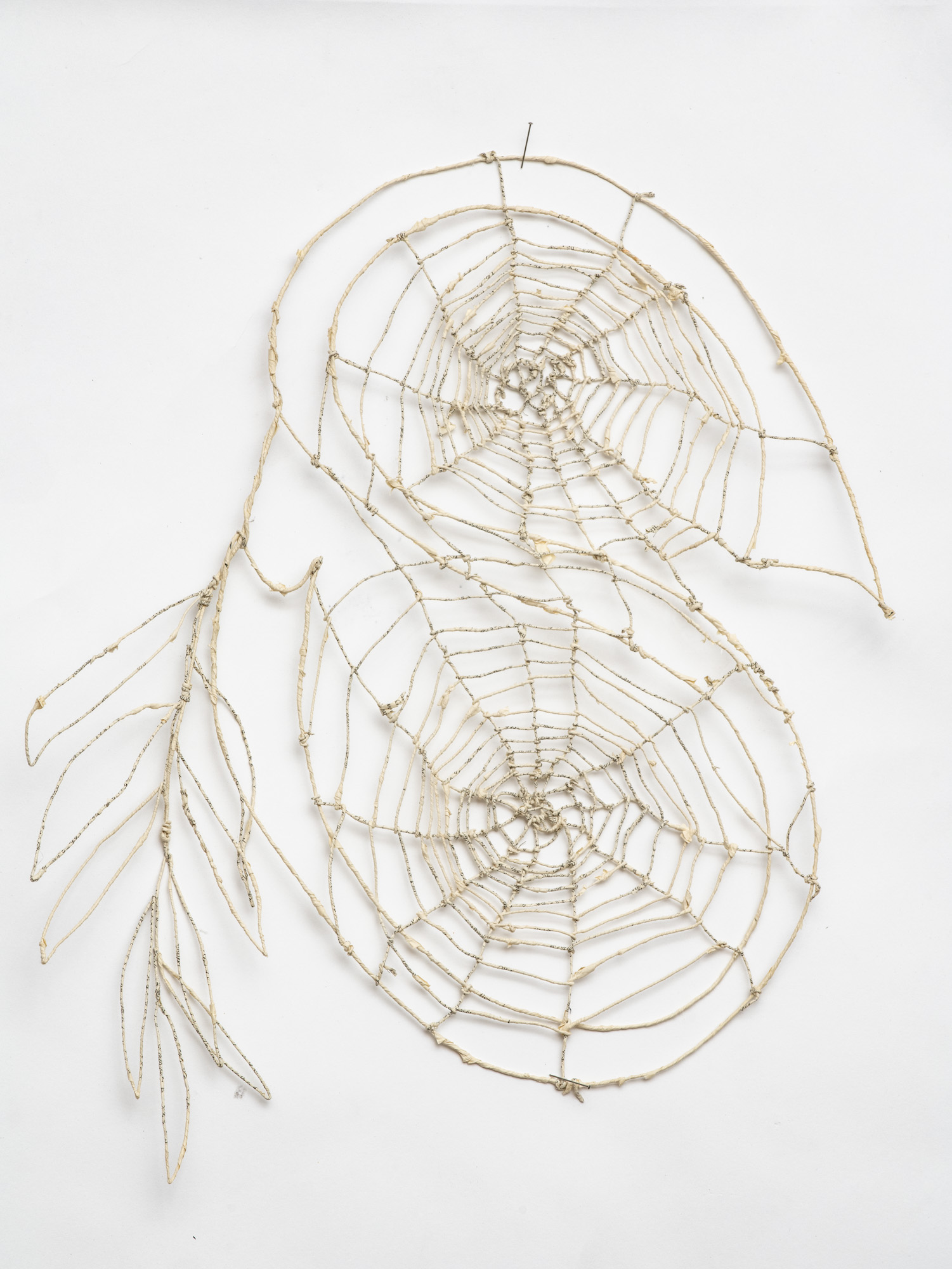
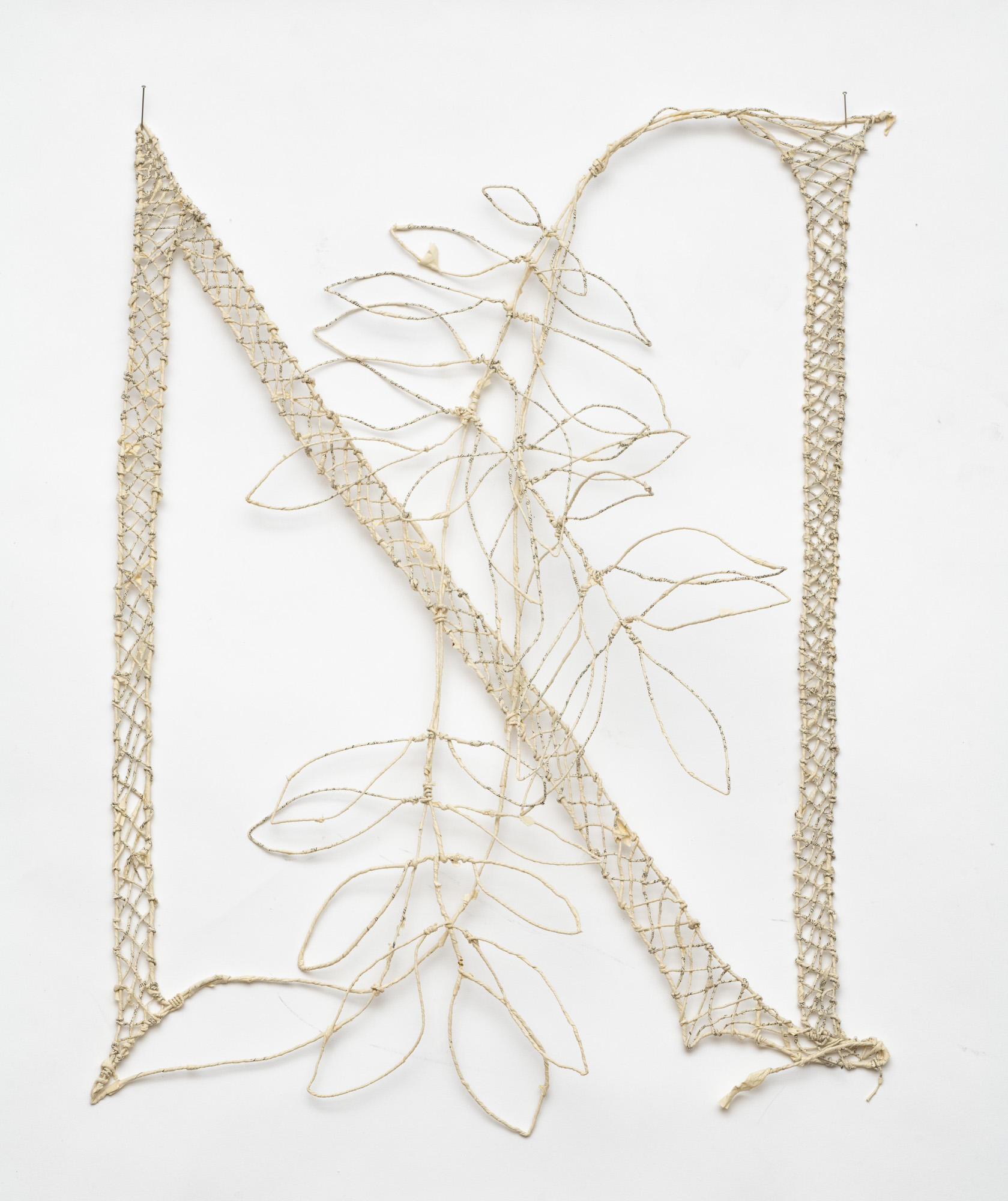
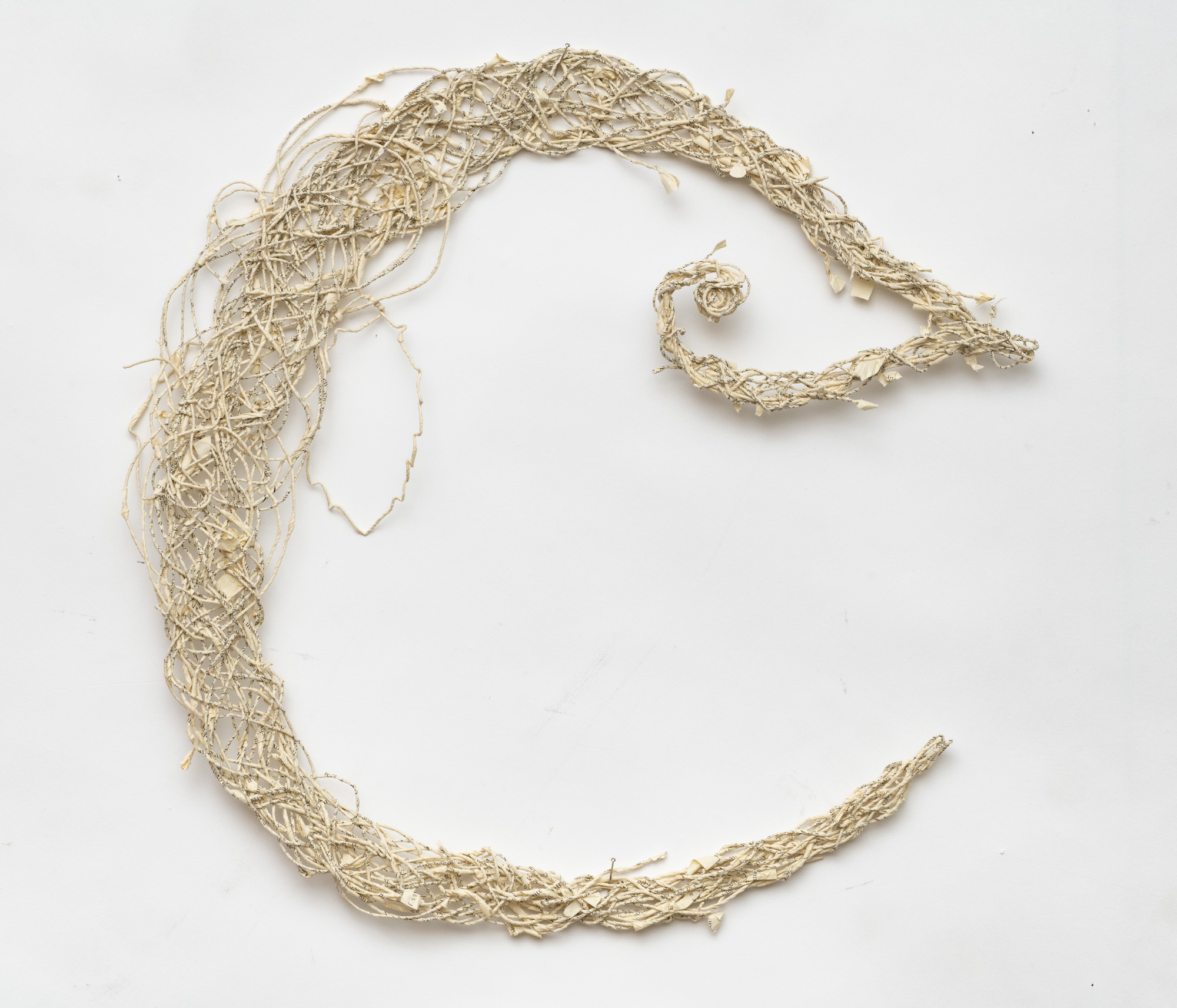
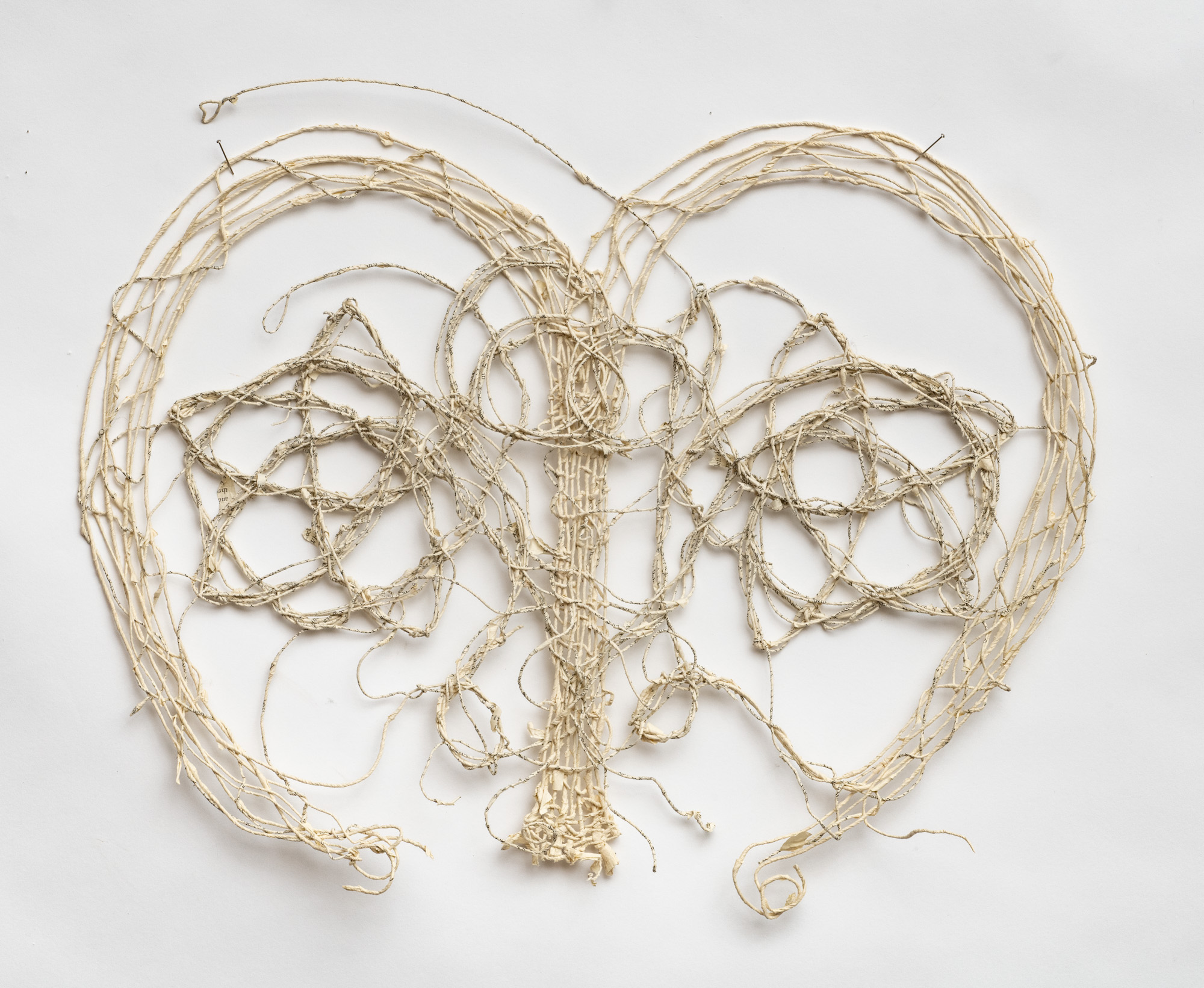
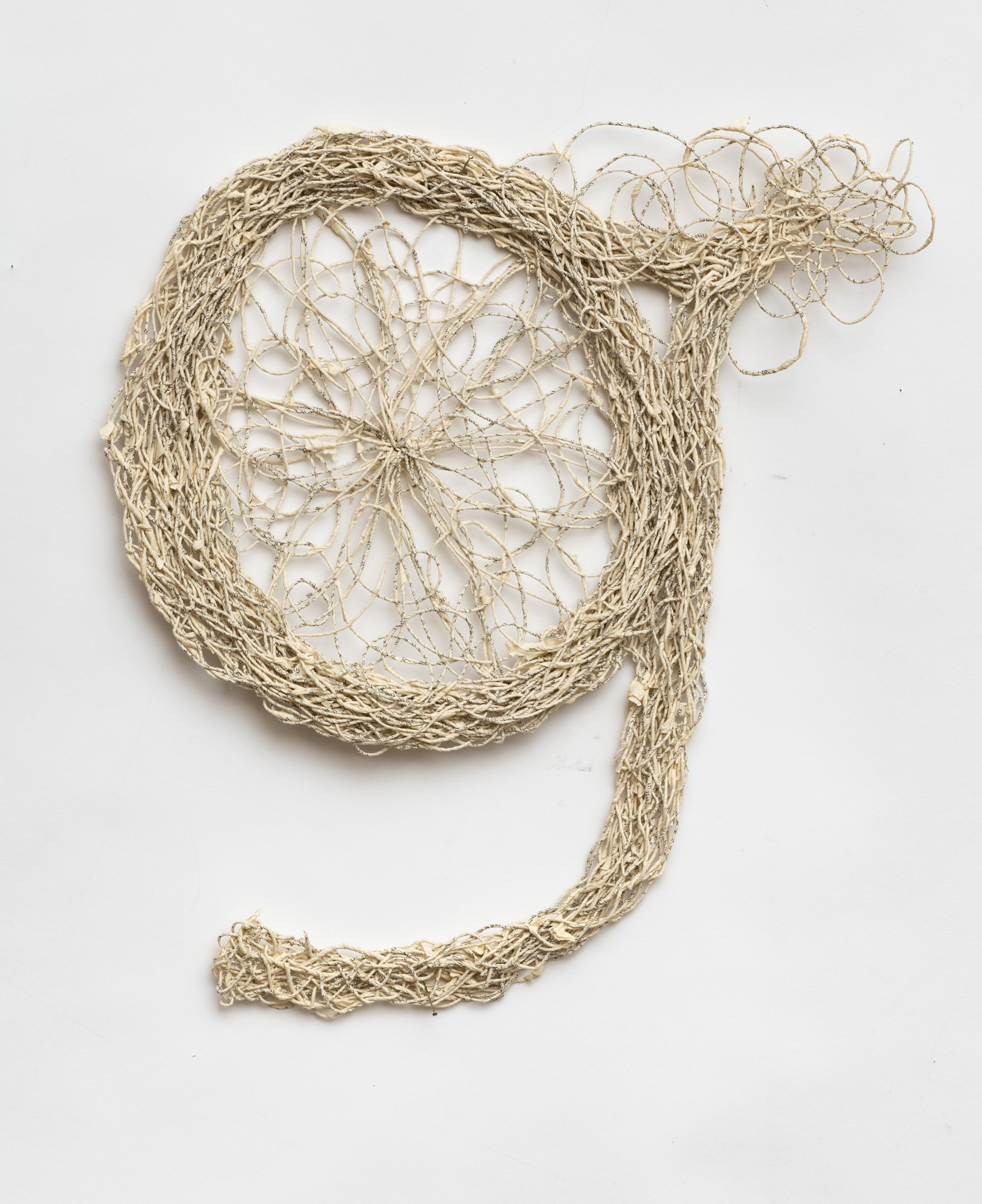
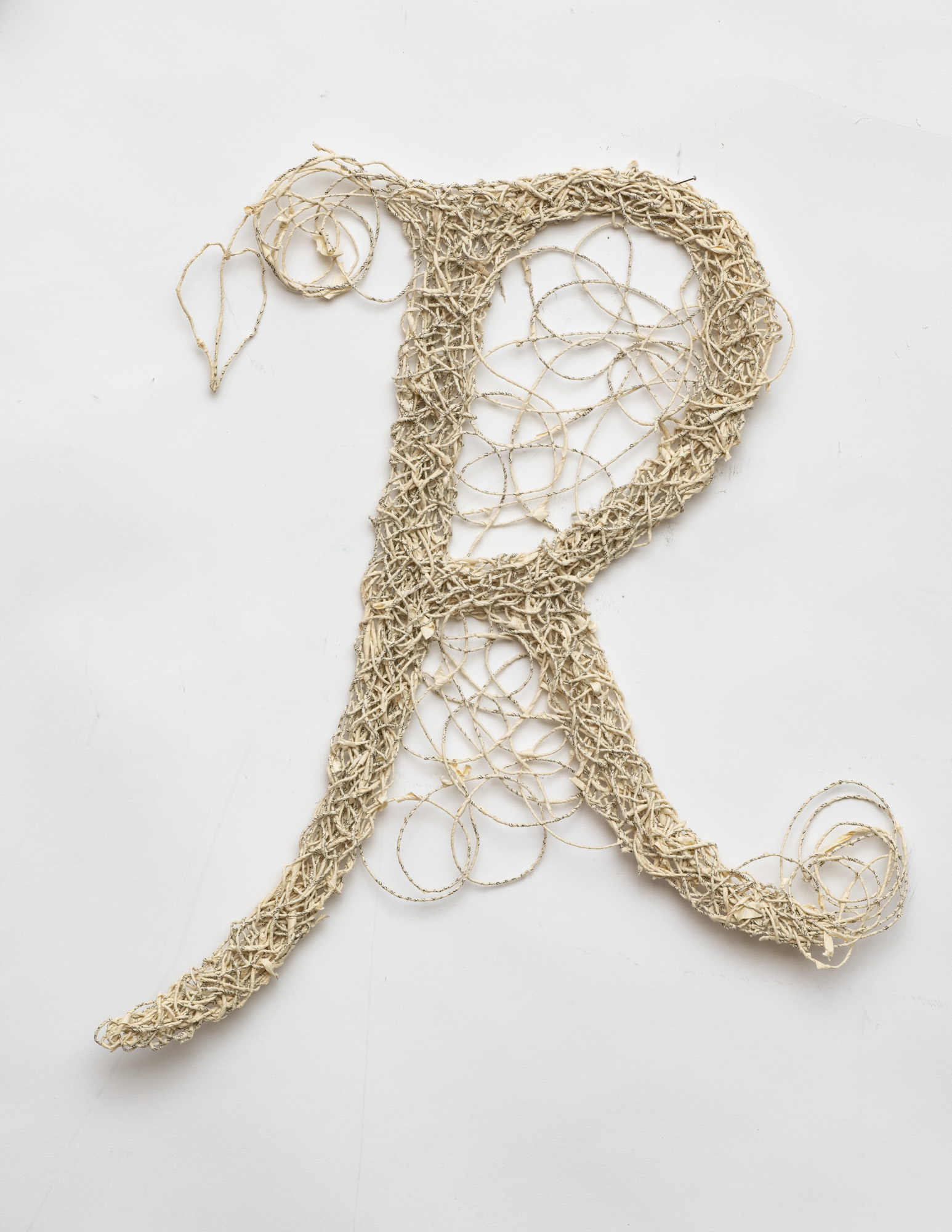
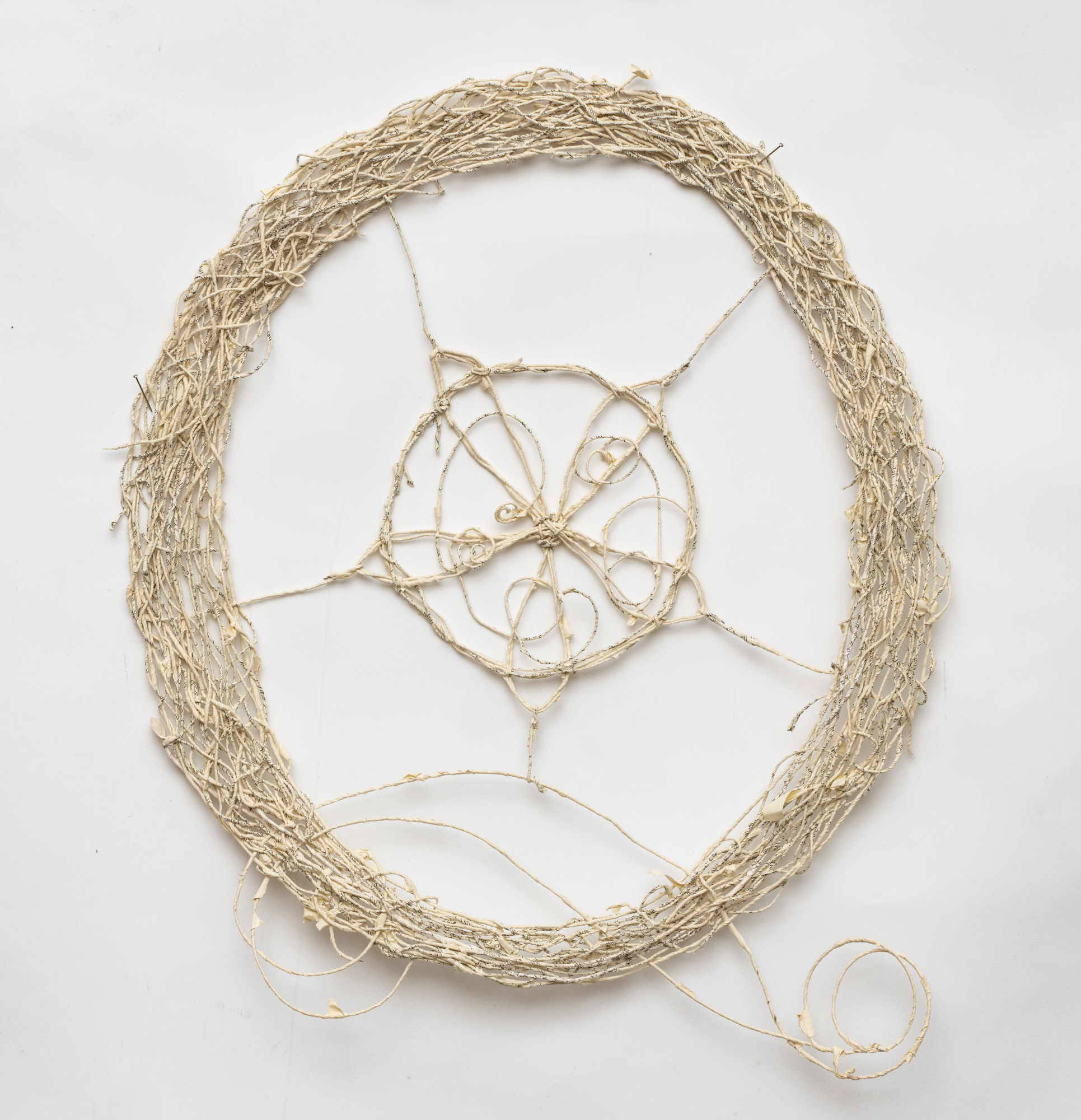
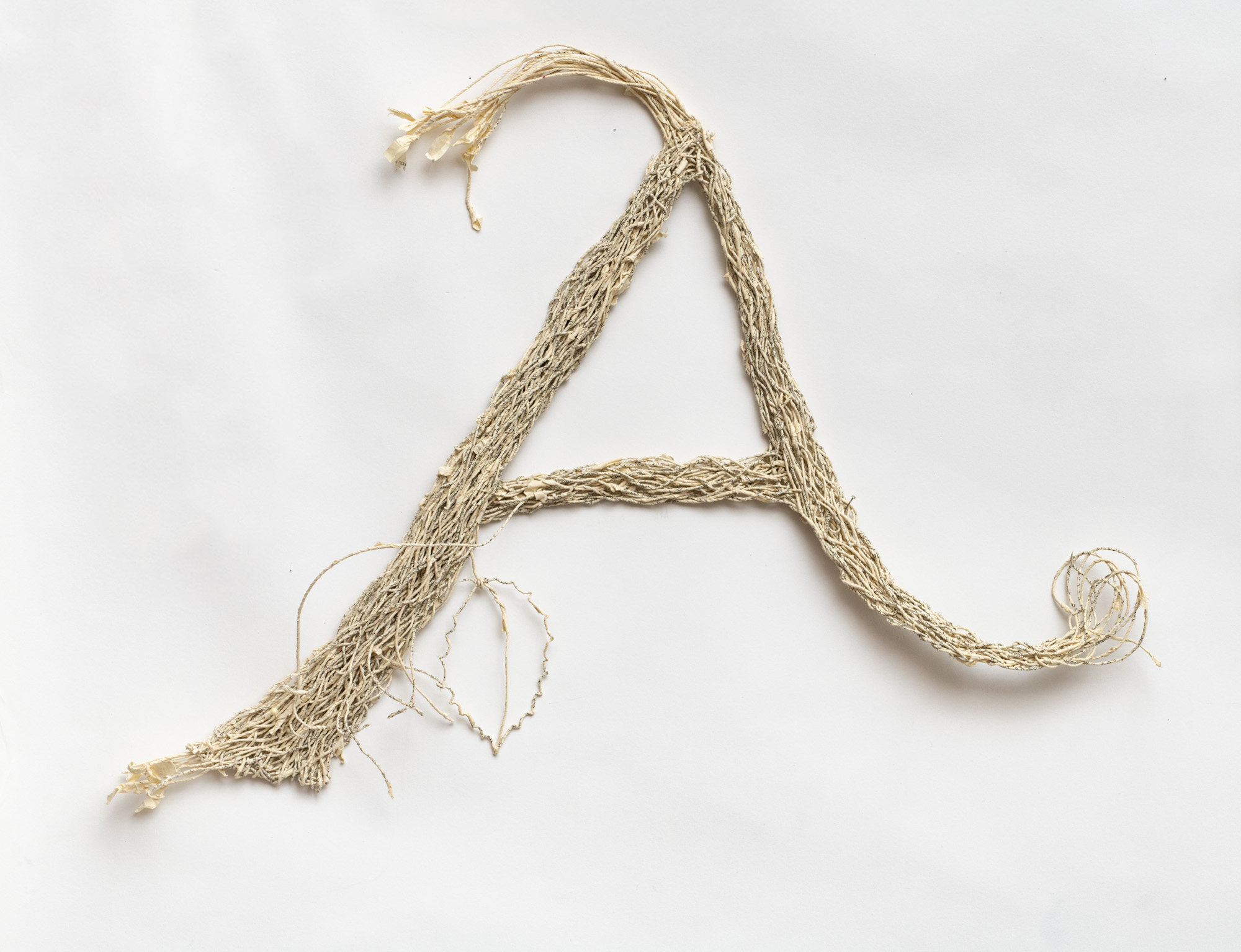
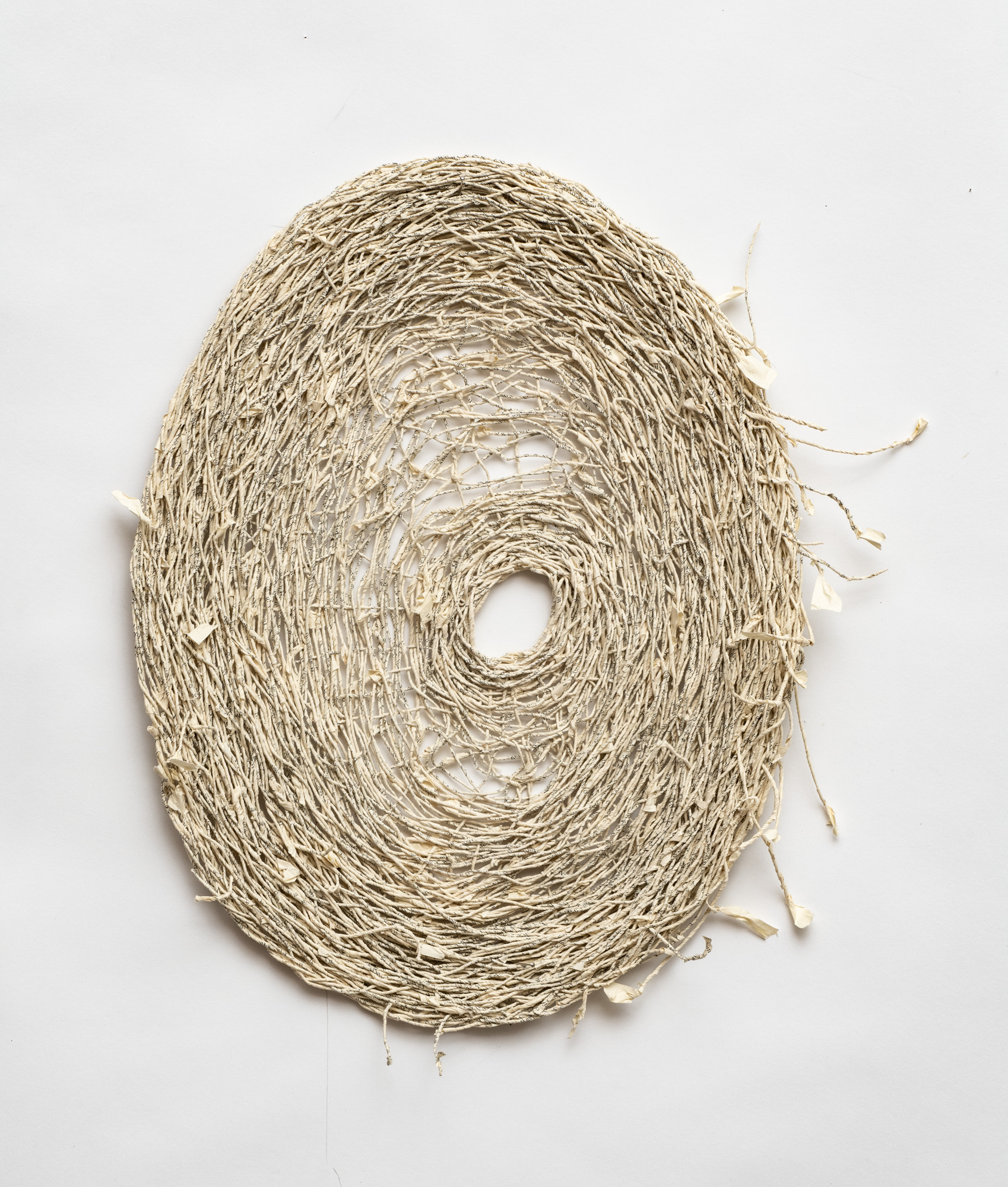
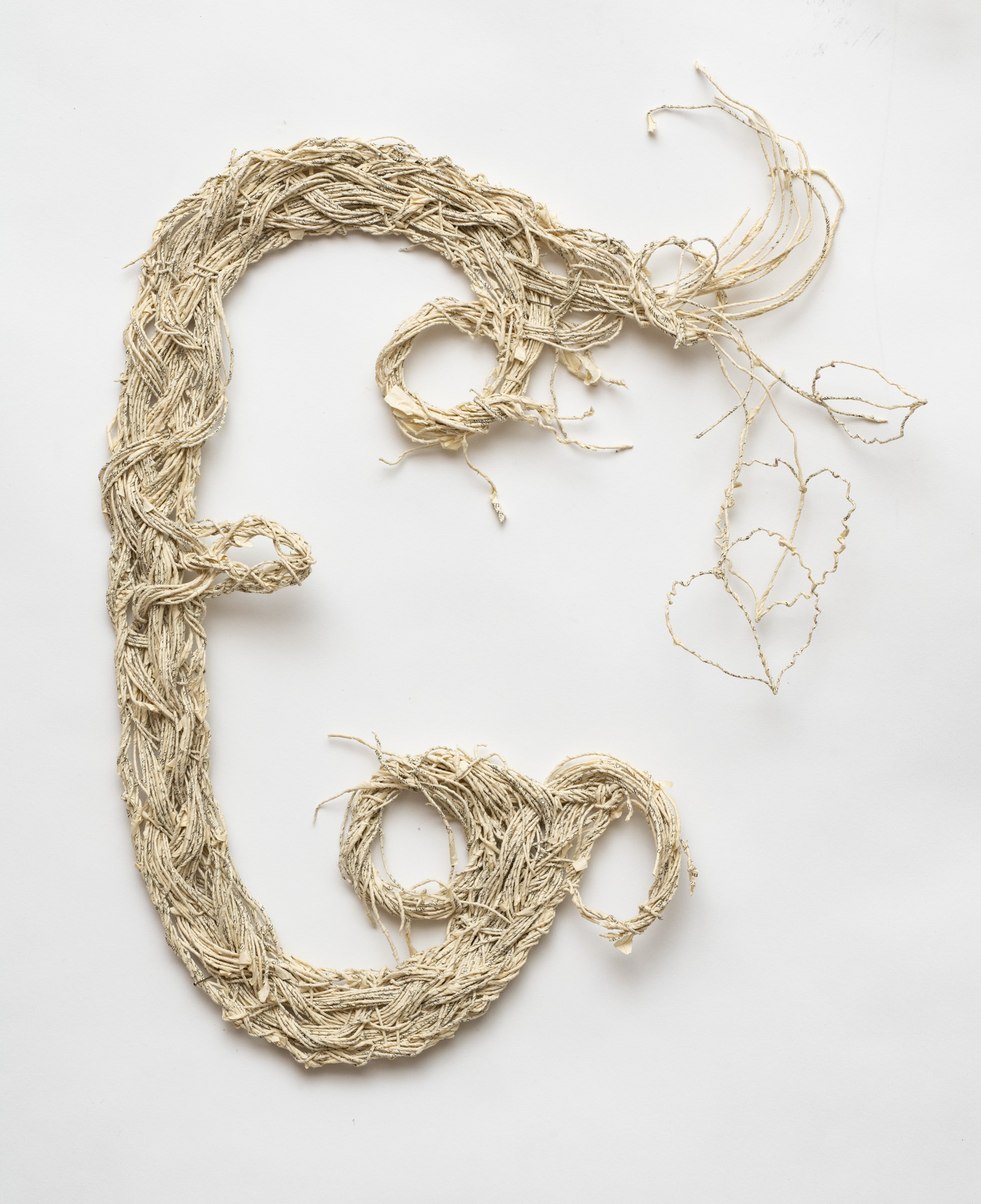
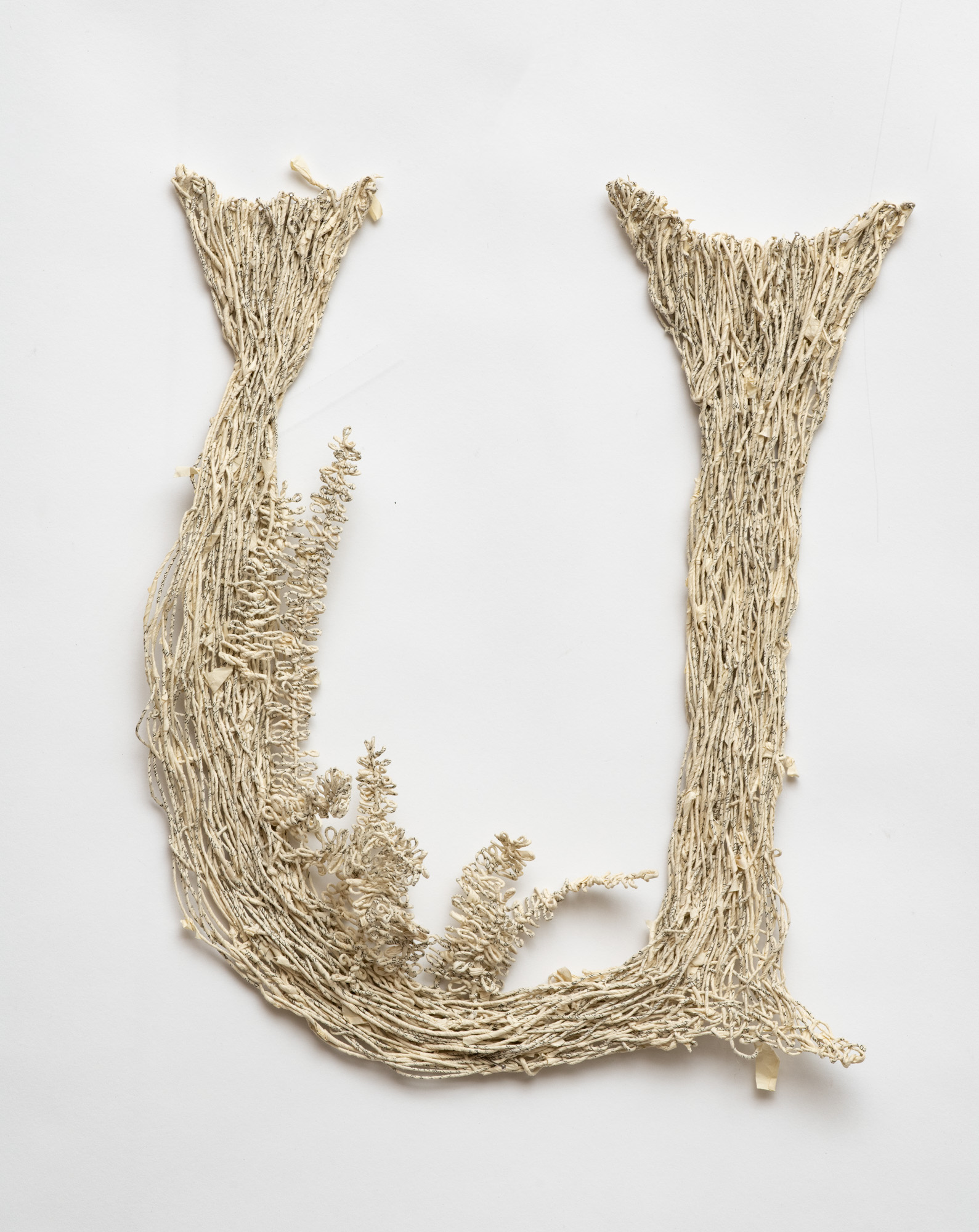
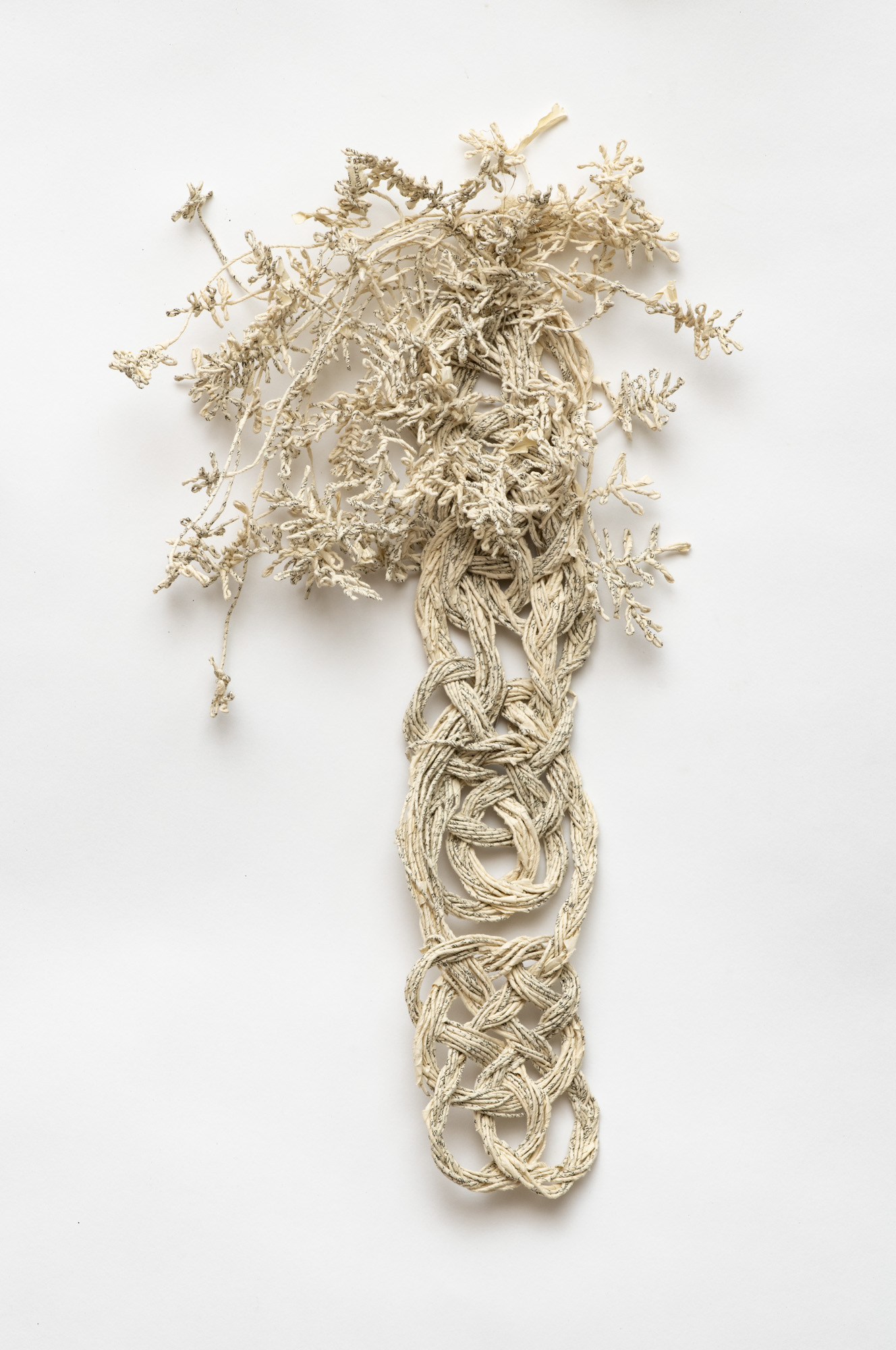
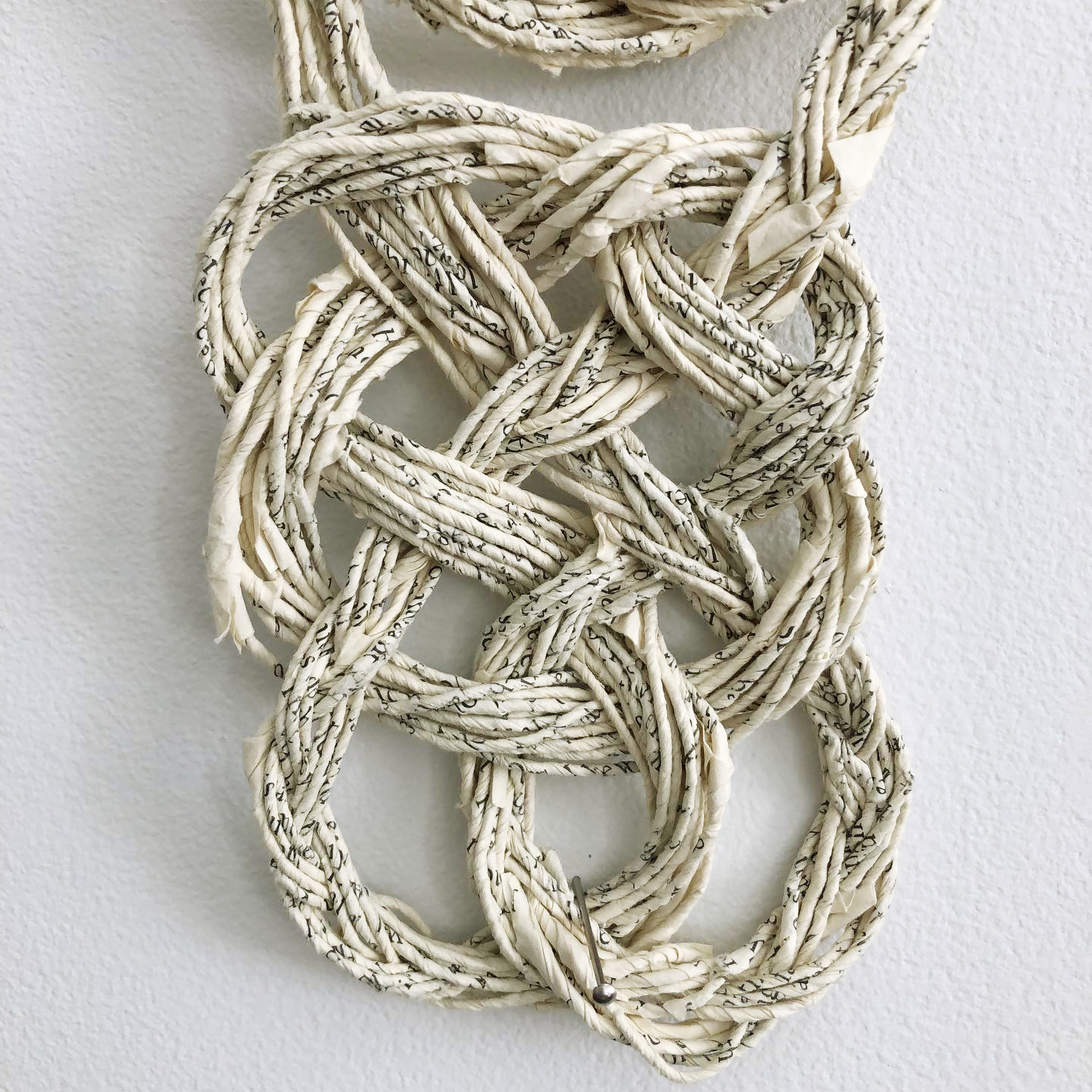
Rewriting Ulysses or Penelope’s Trees is a series of eighteen textile “drawings” displayed in a grid. Each drawing represents one of the eighteen letters in the ancient Irish Tree Alphabet. The letters were made by cutting into strips and spinning all of the pages of a 1997 Everyman’s Library edition of Ulysses by James Joyce. Each of the letters is made using the pages from one of the eighteen chapters of the book. The first letter is the first chapter, and so on. A variety of weaving, spinning and knot-making techniques were used.
Rewriting Ulysses or Penelope’s Trees est une série de dix-huit « dessins textiles » présentés en grille. Chaque dessin représente l’une des dix-huit lettres de l’ancien alphabet oghamique, aussi appelé alphabet des arbres irlandais. Les lettres ont été réalisées en découpant en bandes et en filant toutes les pages d’une édition d’Ulysse de James Joyce parue en 1997 dans l’Everyman’s Library. Chacune des lettres est réalisée à partir des pages d’un des dix-huit chapitres du livre. La première lettre est le premier chapitre, et ainsi de suite. Diverses techniques de tissage, de filage et de fabrication de nœuds ont été utilisées.
Statement
When I was creating the forms of the letters for Rewriting Ulysses or Penelope’s Trees, I drew inspiration from the illuminated letters in the Book of Kells, an ancient illustrated manuscript containing the four gospels. I also incorporated in each paper-thread drawing, the leaf shape of the corresponding letter in the Irish alphabet (for example, the D letter is for Dair, which is Oak in English – see full list below). The Irish Tree Alphabet and the Book of Kells were both inspirations to James Joyce. I combined these two sources in Rewriting Ulysses or Penelope’s Trees.
Lorsque j’ai créé la forme des lettres pour Rewriting Ulysses or Penelope’s Trees, je me suis inspirée des lettres enluminées du Livre de Kells, un ancien manuscrit illustré contenant les quatre évangiles. J’ai également incorporé dans chaque dessin en fil de papier la forme de la feuille de la lettre correspondante de l’alphabet irlandais (par exemple, la lettre D est pour Dair, ou chêne en français – voir la liste complète ci-dessous). L’alphabet irlandais et le livre de Kells ont tous deux inspiré James Joyce. J’ai combiné ces deux sources dans Rewriting Ulysses or Penelope’s Trees.
Karen Trask & Don Goodes, 2025
The Irish Tree Alphabet
Chapter one: B for Beith in Ogham or Old Irish, Birch in English, Bouleau en français
Chapter two: L for Luis in Ogham or Old Irish, Rowan in English, Sorbier en français
Chapter three: F for Fern in Ogham or Old Irish, Alder in English, Aulne en français
Chapter four: S for Sail in Ogham or Old Irish, Willow in English, Saule en français
Chapter five: N for Nion in Ogham or Old Irish, Ash in English or Frène en français
Chapter six: H for Huath in Ogham or Old Irish, Hawthorn in English, Aubépine en français
Chapter seven: D for Dair in Ogham or Old Irish, Oak in English, Chêne en français
Chapter eight: T for Tinne in Ogham or Old Irish, Holly in English, Houx en français
Chapter nine: C for Coll in Ogham or Old Irish, Hazel in English, Noisetier en français
Chapter ten: Q for Qeirt in Ogham or Old Irish, Apple in English, Pomme en français
Chapter eleven: M for Muin in Ogham or Old Irish, Vine in English, Vigne en français
Chapter twelve: G for Gort in Ogham or Old Irish, Ivy in English, Lière en français
Chapter thirteen: R for Ruis in Ogham or Old Irish, Elder in English, Sureau en français
Chapter fourteen: A for Ailm in Ogham or Old Irish, Elm in English, Orme en français
Chapter fifteen: O for Onne in Ogham or Old Irish, Gorse in English, Ajoncs en français
Chapter sixteen: U for Úr in Ogham or Old Irish, Heather in English, Bruyère en français
Chapter seventeen: E for Eadhadh in Ogham or Old Irish, Poplar in English, Peuplier en français
Chapter eighteen: I for Iodhadh in Ogham or Old Irish, Yew in English, If en français